Skip to content

Brazilian Jiu-Jitsu history guide • Gracie Barra

The most important names in Brazilian Jiu-Jitsu

Published · Updated

From a Japanese judoka in Belém to more than 1,000 Gracie Barra schools: the people who built Brazilian Jiu-Jitsu.

This guide covers 13 names every student hears sooner or later. Each profile tells you who they were, what they did, and why it still matters every time you step on the mat, including how their lineage reaches Gracie Barra Riverton.

Facts checked November 2026

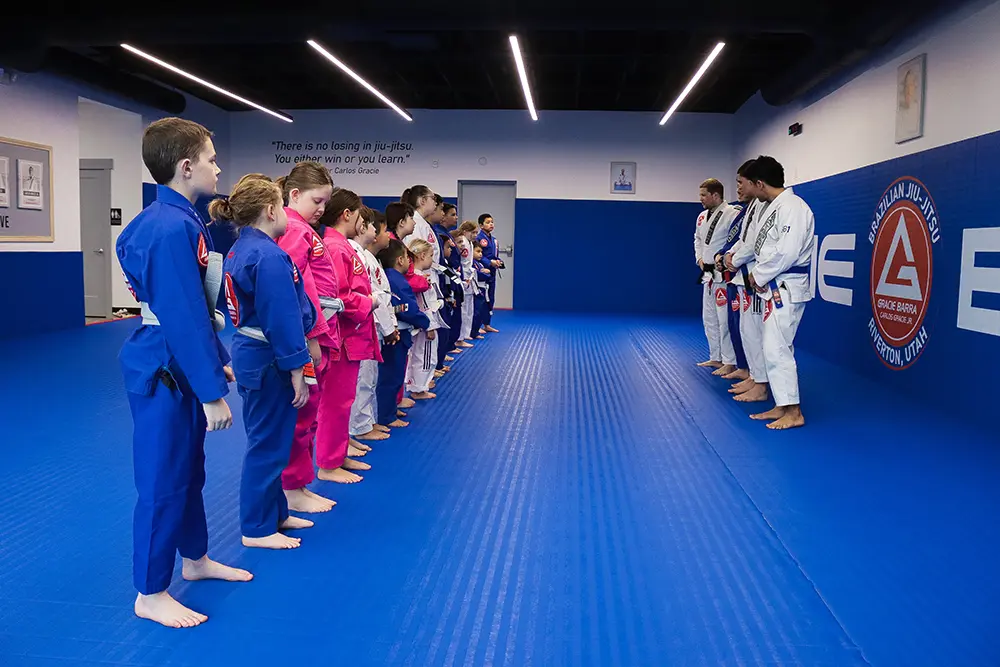
Kids in gis lined up facing their instructors before a class at Gracie Barra Riverton

The short version

Origins
Japanese judoka Mitsuyo Maeda taught in Belém, Brazil, where a teenage Carlos Gracie became his student around 1917.
Founders
Carlos Gracie and his brothers, especially Hélio, turned it into Gracie Jiu-Jitsu in Rio de Janeiro.
Proof
Rickson Gracie in Japan and Royce Gracie at UFC 1 in 1993 made the world pay attention.
Gracie Barra
Founded by Carlos Gracie Jr. in 1986 in Barra da Tijuca, Rio de Janeiro.
The sport
Carlos Gracie Jr. also created the CBJJ in 1994 and the IBJJF in 2002.
Today
More than 1,000 Gracie Barra schools in over 45 countries, with 100,000+ students.
Riverton
Our Head Professor earned his black belt at Gracie Barra Matriz, the original school.

Brazilian Jiu-Jitsu history

A short timeline, 1878 to today

The key moments in the people below, in order. Each one is explained in the profiles further down.

  1. 1878Mitsuyo Maeda is born in Aomori, Japan.
  2. 1895Maeda joins the Kodokan judo school in Tokyo.
  3. 1914Maeda's troupe reaches Brazil. He later settles in Belém.
  4. 1917A teenage Carlos Gracie starts training with Maeda in Belém.
  5. 1930Carlos Gracie starts teaching at the Rio academy that grows into the family school.
  6. 1951Hélio Gracie faces Masahiko Kimura. The armlock that beat him now carries Kimura's name.
  7. 1955Hélio's fight with Valdemar Santana lasts nearly four hours. It is his last.
  8. 1982Rolls Gracie dies at 31.
  9. 1986Carlos Gracie Jr. opens Gracie Barra in Barra da Tijuca, Rio de Janeiro.
  10. 1993Royce Gracie wins UFC 1.
  11. 1994Carlos Gracie Jr. creates the CBJJ and launches what becomes Gracie Magazine.
  12. 2002The IBJJF is founded.
  13. 2005Gracie Barra opens its first school outside Brazil, in California.
  14. 2026Carlos Gracie Jr. is promoted to red belt at the Gracie Barra World Summit.

Where it started

The founders

A Japanese judoka, a teenager in Belém and his younger brother. Brazilian Jiu-Jitsu starts with these three.

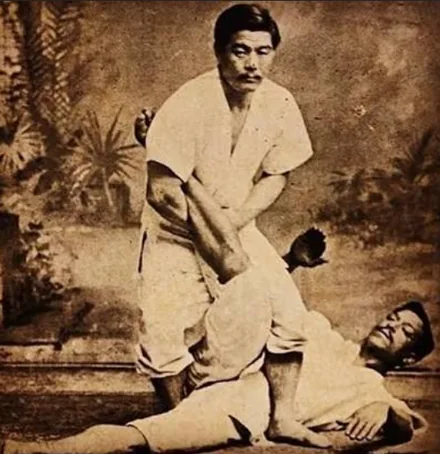
Historical photograph of Mitsuyo Maeda demonstrating a grappling technique

The judoka who brought the art to Brazil

Mitsuyo Maeda

Kodokan judo pioneer, known in Brazil as Conde Koma.

Born
November 18, 1878, Hirosaki, Aomori, Japan
Died
November 28, 1941, Belém, Brazil
Rank
7th dan, Kodokan judo
Connection
Teacher of Carlos Gracie

Maeda joined Jigoro Kano's Kodokan in Tokyo in 1895 and trained under senior teacher Tsunejiro Tomita. From 1904 he traveled the world, testing his judo in challenge matches in the United States, Europe, Cuba, Mexico and Latin America. In Spain he took the ring name Conde Koma.

His troupe reached Brazil by 1914 and he settled in Belém, in the state of Pará, where he became a Brazilian citizen. Around 1917, a teenage Carlos Gracie watched one of his demonstrations and became his student. Historians still debate how long Carlos trained with him, but the line from Maeda to the Gracie family is where Brazilian Jiu-Jitsu begins. The Kodokan promoted him to 7th dan the day before he died.

Why it matters: Maeda's judo put strong emphasis on groundwork. That emphasis is the seed of the Jiu-Jitsu you learn on the mat today.
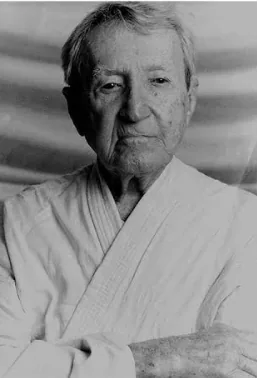
Black-and-white portrait of Carlos Gracie in a Jiu-Jitsu uniform

Founder of Gracie Jiu-Jitsu

Carlos Gracie

Gracie Barra calls him the visionary founder of Brazilian Jiu-Jitsu.

Born
September 14, 1902, Belém, Brazil
Died
October 7, 1994, Petrópolis, Brazil
Rank
10th-degree red belt (Grandmaster)
Family
21 children, 13 of them black belts

Carlos studied with Maeda in Belém for a short time before his family moved to Rio de Janeiro. There he taught what he had learned to his younger brothers, including Hélio, and in 1930 he began teaching at the Rio de Janeiro academy that grew into the family's school. After his competition years he managed the fight careers of his brothers and sons.

He also created the Gracie Diet, a set of eating rules many in the family still follow. His children include Carlos Gracie Jr., the founder of Gracie Barra, and Rolls Gracie. His daughter Reila is the mother of Roger Gracie.

Why it matters: Every Gracie Barra student trains in his lineage. The founder of Gracie Barra is his son.

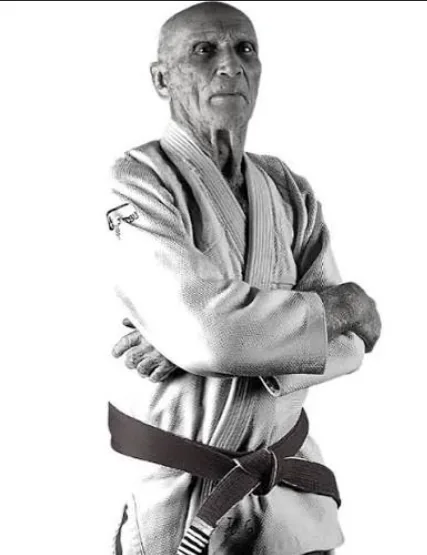
Black-and-white portrait of Hélio Gracie in a Jiu-Jitsu gi

The technician who refined the system

Hélio Gracie

Credited with adapting the techniques so smaller people could use them.

Born
October 1, 1913, Belém, Brazil
Died
January 29, 2009, Petrópolis, Brazil
Rank
10th-degree red belt
Famous sons
Rorion, Rickson and Royce Gracie

Hélio learned from his older brother Carlos. The family story says he found some techniques hard to apply at his size, so he leaned on leverage, timing and position. Gracie Barra describes him as the master of technique who showed that leverage and skill can reduce the advantage of strength and size.

He fought some of the most famous matches of his era: a 1951 loss to Japanese judo star Masahiko Kimura, and a 1955 fight of nearly four hours against Valdemar Santana, his last. His son Rorion brought Gracie Jiu-Jitsu to the United States, and Hélio cornered his son Royce at UFC 1 and UFC 2. He kept teaching until a few days before he died, at 95.

Why it matters: The kimura you drill in class is named after the man who beat Hélio with it. That's how central his fights are to the art's history.

The next generation

The game changers

The innovator, the undefeated fighter and the man who won the first UFC. They took the art from family academies to the world.

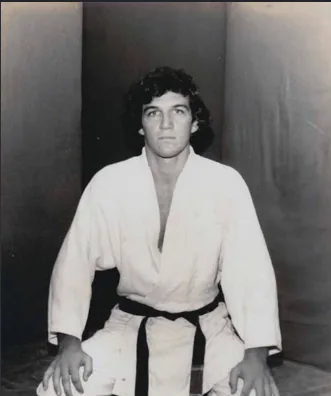
Black-and-white photo of Rolls Gracie wearing a Jiu-Jitsu gi

The innovator

Rolls Gracie

Gracie Barra calls him a revolutionary innovator who blended tradition with modern athleticism.

Born
March 28, 1951, Rio de Janeiro, Brazil
Died
June 6, 1982, Resende, Brazil, age 31
Father
Carlos Gracie
Students
Carlos Gracie Jr., Rickson Gracie, Romero "Jacaré" Cavalcanti

Rolls was Carlos Gracie's son and trained with his uncle Hélio. He was one of the first in the family to cross-train seriously in judo, sambo and freestyle wrestling, and he brought what worked back into Jiu-Jitsu. Some in the family considered him their best fighter.

His students included Carlos Gracie Jr., Rickson Gracie, Royler Gracie, Rigan Machado, Romero "Jacaré" Cavalcanti and Maurício Gomes, Roger Gracie's father. Rolls died in a hang-gliding accident in 1982, at 31. Carlos Gracie Jr. names him as his main influence, and Gracie Barra grew out of the part of the family academy Rolls had led.

Why it matters: Gracie Barra's open, evolving approach to technique traces straight back to Rolls.

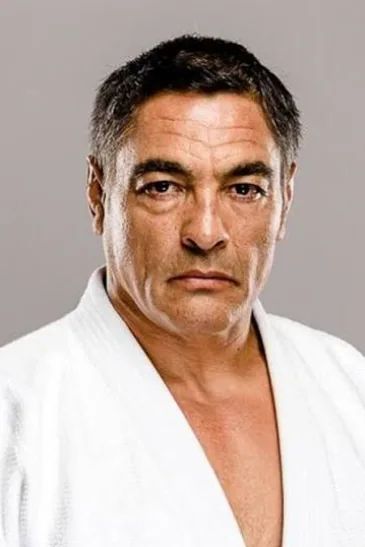
Portrait of Rickson Gracie wearing a white Jiu-Jitsu gi

The undefeated fighter

Rickson Gracie

Widely regarded as the family's best fighter of the 1980s and 1990s.

Born
November 21, 1959, Rio de Janeiro, Brazil
Father
Hélio Gracie
Teachers
Hélio Gracie and Rolls Gracie
Rank
9th-degree red belt (2017)

Rickson grew up on the mats with his father Hélio and his cousin Rolls. In 1980 he beat Rei Zulu in Brasília, and he won their rematch in 1984. In the 1990s he won Vale Tudo Japan in 1994 and 1995, then beat Nobuhiko Takada at Pride 1 in 1997 and again in 1998.

His last professional fight, in 2000, was a choke win over Masakatsu Funaki. He retired with a reported undefeated record, and his fights in Japan helped make Jiu-Jitsu famous there.

Why it matters: Rickson showed a whole generation what Jiu-Jitsu looks like at the highest level of fighting.

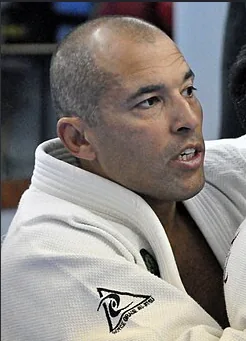
Royce Gracie wearing a Jiu-Jitsu gi

The man who showed BJJ to the world

Royce Gracie

Winner of UFC 1, UFC 2 and UFC 4.

Born
December 12, 1966, Rio de Janeiro, Brazil
Father
Hélio Gracie
UFC titles
UFC 1 (1993), UFC 2 and UFC 4 (1994)
Honors
UFC Hall of Fame, 2003

On November 12, 1993, Royce entered the first UFC, a tournament with no weight classes, and won it, finishing Gerard Gordeau with a rear-naked choke in the final. He won UFC 2 in March 1994 and UFC 4 in December 1994, where he submitted Dan Severn with a triangle choke. That made him the only three-time UFC tournament winner.

In 2003 he became one of the first two fighters in the UFC Hall of Fame, with Ken Shamrock. His 2000 fight with Kazushi Sakuraba in Pride lasted about 90 minutes.

Why it matters: Royce's UFC wins are why most people in the United States first heard the words Brazilian Jiu-Jitsu.

Our lineage

Gracie Barra legends

The founder of Gracie Barra, the leaders who took it worldwide and the champions it produced. These are the names behind the curriculum taught in Riverton.

Carlos Gracie Jr. standing in a Gracie Barra gi

Founder of Gracie Barra and the IBJJF

Carlos Gracie Jr.

Built Jiu-Jitsu into a global organization and a sport with world championships.

Born
January 17, 1956, Rio de Janeiro, Brazil
Father
Carlos Gracie
Main influence
His brother, Rolls Gracie
Rank
Red belt, promoted April 2026

Carlos Gracie Jr. grew up training with his uncles and cousins, including his uncle Hélio, and credits his brother Rolls as his main influence. He earned his black belt around 1977. In 1986 he opened Gracie Barra in Barra da Tijuca, a beach neighborhood of Rio de Janeiro, naming it after the family and the place rather than himself.

In 1994 he created the Brazilian Jiu-Jitsu Confederation (CBJJ) and launched the paper that became Gracie Magazine. In 2002 he founded the International Brazilian Jiu-Jitsu Federation (IBJJF), which runs the World, Pan and European championships. In 2005 Gracie Barra opened its first school outside Brazil, in California. Today it has more than 1,000 schools in over 45 countries. In April 2026 he was promoted to red belt at the Gracie Barra World Summit.

Why it matters: Gracie Barra Riverton follows the curriculum he structured, and our students compete in the events his federation created.

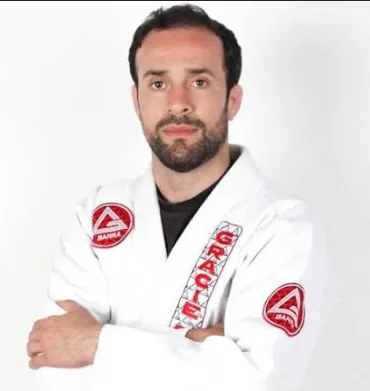
Márcio Feitosa wearing a white Gracie Barra gi

Champion and global Gracie Barra leader

Márcio Feitosa

One of the first great competitors made at Gracie Barra.

Born
May 16, 1976, Rio de Janeiro, Brazil
Teacher
Carlos Gracie Jr.
Black belt
1996, at 19
Titles
IBJJF World champion (1997, 2002), ADCC champion (2001)

Feitosa grew up in Barra da Tijuca and started training at Gracie Barra at 12. He was helping teach classes at 15 and earned his black belt from Carlos Gracie Jr. at 19. He won the IBJJF World Championship in 1997 and 2002, the ADCC in 2001, and several Pan American and Brazilian national titles.

In 2005 he helped Carlos Gracie Jr. open the first Gracie Barra school outside Brazil, in California, and co-founded Gracie Barra Japan in Kobe the same year. Gracie Barra describes him today as being at the head of the organization, focused on its growth around the world.

Why it matters: He is the clearest example of the Gracie Barra path: student, competitor, instructor, then leader.

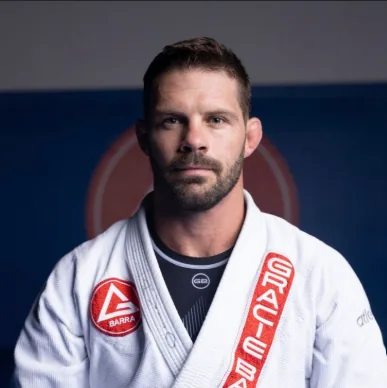
Flavio Almeida wearing a Gracie Barra gi

Director of Gracie Barra North America

Flavio Almeida

One of the leaders who built Gracie Barra in the United States.

Born
1979, raised in Rio de Janeiro, Brazil
Teacher
Carlos Gracie Jr.
Rank
5th-degree black belt
Role
Director of Gracie Barra North America

Flavio Alves de Almeida, nicknamed Cachorrinho, grew up in Rio de Janeiro and trained in the Gracie Barra lineage under Carlos Gracie Jr. He won the IBJJF World Championship at blue belt in 1997 and at brown belt in 1999. As a black belt he took World bronze medals and, in 2007, an ADCC silver medal. Along the way he stepped away from competition to study economics at UFRJ, then came back to grappling in 2006.

After moving to the United States, he taught in New Jersey and at Márcio Feitosa's school in California, then opened Gracie Barra San Clemente, the first school he founded. He has co-founded eight Gracie Barra schools in Southern California and the Phoenix area, produced more than 30 black belts, and won several IBJJF World Masters titles. Gracie Barra identifies him as the Director of GB in North America.

Why it matters: He directs Gracie Barra in North America, the region our four Utah schools belong to.

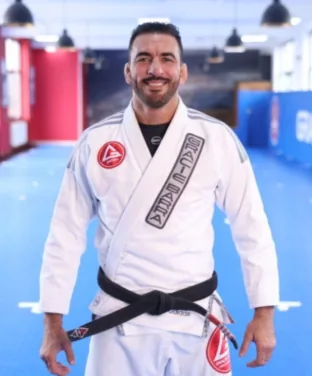
Braulio Estima standing in a Gracie Barra academy

World and ADCC champion, pioneer of Gracie Barra in the UK

Braulio Estima

Known for his triangle attacks and dangerous open guard.

Born
June 10, 1980, Recife, Brazil
Black belt
January 4, 2004, from Carlos Gracie Jr.
Titles
IBJJF World champion (2004, 2006, 2009), ADCC champion (2009)
Academy
Gracie Barra Birmingham, UK

Braulio started at Gracie Barra in Brazil and received his black belt from Carlos Gracie Jr. in 2004. That same year he won his first IBJJF World title, adding more in 2006 and 2009. 2009 was his best year: he also won both his weight class and the absolute division at the ADCC.

He won the ADCC superfight in 2011 and three European titles. He moved to England, where he runs Gracie Barra Birmingham and helped grow Jiu-Jitsu across the UK. In 2021 he was part of the first class of the ADCC Hall of Fame.

Why it matters: Braulio is the Gracie Barra competitor who became a teacher and built Jiu-Jitsu in a new country.

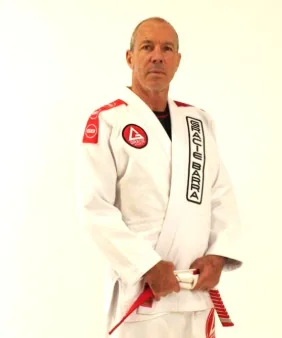
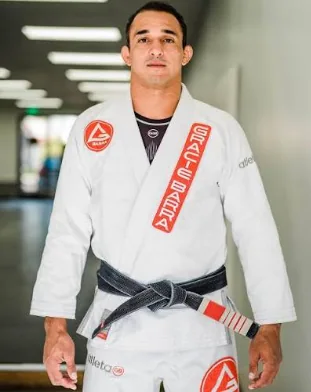
Romulo Barral standing in a white Gracie Barra gi

Five-time IBJJF world champion at black belt

Romulo Barral

Known for his spider guard.

Born
May 3, 1982, Diamantina, Brazil
Teacher
Vinicius "Draculino" Magalhães
Titles
IBJJF World champion (2006, 2007, 2009, 2012, 2014), ADCC champion (2013)
Academy
Gracie Barra Northridge, California

Romulo started in Belo Horizonte under Vinicius "Draculino" Magalhães and earned his black belt in 2004. He won the IBJJF World Championship at medium-heavyweight five times between 2006 and 2014 and took silver in the open class three times.

He also won the No-Gi Worlds in 2007 and the ADCC at 88 kg in 2013. In 2011 he opened Gracie Barra Northridge in California.

Why it matters: Romulo shows how one position, trained deeply for years, can carry you to the top.

More of the Gracie legacy

Other important Gracies

Beyond the figures who founded and led Gracie Barra, Roger and Kyra Gracie have made lasting contributions to competitive Jiu-Jitsu and helped bring the sport to new audiences.

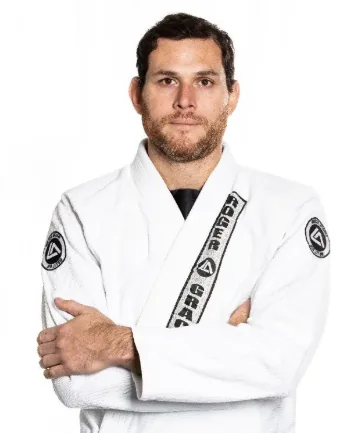
Roger Gracie wearing a white Jiu-Jitsu gi

The greatest competitor of all time, for many

Roger Gracie

Ten-time IBJJF world champion at black belt.

Born
September 26, 1981, Rio de Janeiro, Brazil
Mother
Reila Gracie, daughter of Carlos Gracie
Black belt
2003, from his uncle Carlos Gracie Jr.
Titles
10 IBJJF World titles at black belt, ADCC champion

Roger trained at Gracie Barra under his uncle, Carlos Gracie Jr., who gave him his black belt in 2003. His father, Maurício Gomes, was a black belt under Rolls Gracie. Between 2004 and 2010 he won 10 IBJJF World titles at black belt and became the first to win the open weight division three times. In 2009 he submitted every opponent in both his weight class and the open class.

He won the ADCC in 2005, submitting everyone, and in 2021 became the first inductee into the ADCC Hall of Fame. He opened the Roger Gracie Academy in London in 2004 and later became ONE Championship's first light heavyweight champion. His game is famously simple: closed guard, back takes and collar chokes from the mount.

Why it matters: Roger proves that fundamentals, done better than anyone else, are enough to win at the very top.

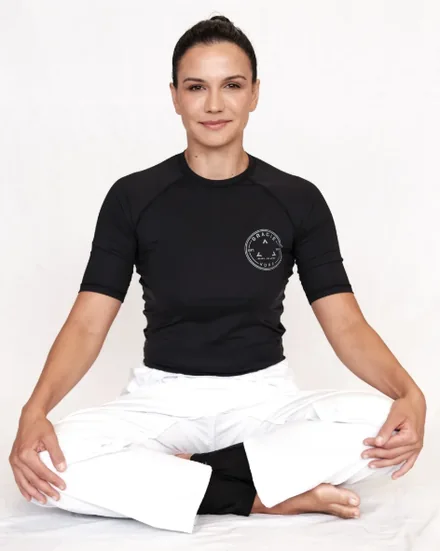
Kyra Gracie seated wearing Jiu-Jitsu training clothes

Pioneer for women in Jiu-Jitsu

Kyra Gracie

The first woman in the Gracie family to actively compete.

Born
May 29, 1985, Rio de Janeiro, Brazil
Family
Granddaughter of Robson Gracie, son of Carlos Gracie
Titles
4 IBJJF World titles at black belt, 3 ADCC titles
Honors
First woman in the ADCC Hall of Fame (2021)

Kyra came up through Gracie Barra, with Carlos Gracie Jr. among her teachers, and became the first woman in the Gracie family to compete seriously. As a black belt she won the IBJJF World Championship in 2006, 2008 (her weight class and the open class) and 2010, and the ADCC under 60 kg in 2005, 2007 and 2011.

In 2021 she became the first woman inducted into the ADCC Hall of Fame. Since 2010 she has competed for the Gracie Elite Team.

Why it matters: Kyra opened the door for women in a family, and a sport, where the top had been mostly male.

Gracie Barra Riverton

From Barra da Tijuca to Riverton

The names on this page are not distant history. Here is how the line reaches our mats in Utah.

  1. Belém, around 1917. Mitsuyo Maeda teaches a teenage Carlos Gracie.
  2. Rio de Janeiro, 1930. Carlos Gracie starts teaching in Rio and raises a family of black belts, including Rolls Gracie and Carlos Gracie Jr.
  3. Barra da Tijuca, 1986. Carlos Gracie Jr. opens Gracie Barra, building on what Rolls taught him.
  4. Gracie Barra Matriz. The original school still runs in Barra da Tijuca, today led by Prof. Jefferson Moura.
  5. December 17, 2017. Prof. Seidler Rodrigo earns his black belt under Prof. Jefferson Moura at Gracie Barra Matriz.
  6. Riverton, Utah. Today he leads Gracie Barra Riverton and three other Utah schools, teaching the same Gracie Barra curriculum.

History questions

Brazilian Jiu-Jitsu legends FAQ

Short answers to the history questions students ask most. Want the full story? Ask any of our instructors after class.

Call now
Who founded Brazilian Jiu-Jitsu?

Brazilian Jiu-Jitsu grew out of the judo Mitsuyo Maeda taught in Belém, Brazil. Carlos Gracie, who studied with Maeda as a teenager, and his brothers, especially Hélio Gracie, developed it into Gracie Jiu-Jitsu in Rio de Janeiro. Gracie Barra calls Carlos Gracie the visionary founder of the art.

Who founded Gracie Barra?

Carlos Gracie Jr., son of Carlos Gracie, founded Gracie Barra in 1986 in Barra da Tijuca, Rio de Janeiro. Today it has more than 1,000 schools in over 45 countries.

Who is the best Brazilian Jiu-Jitsu competitor of all time?

There is no official answer, but many people name Roger Gracie. He won 10 IBJJF World titles at black belt and was the first inductee into the ADCC Hall of Fame. He earned his black belt at Gracie Barra.

Who created the IBJJF?

Carlos Gracie Jr. He created the Brazilian Jiu-Jitsu Confederation (CBJJ) in 1994 and the International Brazilian Jiu-Jitsu Federation (IBJJF) in 2002. The IBJJF runs the World, Pan and European championships.

Why is the kimura called the kimura?

It is named after Masahiko Kimura, the Japanese judo champion who beat Hélio Gracie with that armlock in 1951.

How is Gracie Barra Riverton connected to these names?

Our Head Professor, Seidler Rodrigo, earned his black belt under Prof. Jefferson Moura at Gracie Barra Matriz, the original Gracie Barra school in Barra da Tijuca. We teach the same Gracie Barra curriculum used in more than 1,000 schools.

Get started

Train in the same tradition

Your first class is free, and we lend you a gi. Learn the Gracie Barra curriculum that started in Barra da Tijuca, right here in Riverton.

Book a free class