FAQ • Riverton, Utah
Brazilian Jiu-Jitsu questions, answered
Clear answers about starting BJJ, kids and adult classes, training, uniforms, competition, safety, and life at Gracie Barra Riverton.
We're thrilled to bring world-class Brazilian Jiu-Jitsu to our community, and we put this guide together to help you learn about our programs and what makes us special.
Jump to a topic
Over a hundred questions, grouped by who's asking. Pick the section that fits you and skip the rest.
Start here
General questions
I've never played a sport in my life. Is Gracie Barra Riverton for me?
Yes — and that's a more common starting point than you'd think. Our methodology was built to welcome people with zero athletic background. You'll be guided at your own pace by patient instructors who care about your progress.
How do I get started at Gracie Barra Riverton?
It's easy — book a free trial class or reach out to our team. We'll show you around, answer your questions, and let you experience a class first. Our beginner guide walks through exactly what happens on day one.
What do I need to bring to my first class?
Just come with a positive mind and a water bottle. Your first class is free, and we'll provide a loaner Gi. No purchase is required before you start. Once you join, our front desk will help you get set up with your own gi, rash guard, and flip-flops.
How much does Gracie Barra Riverton cost?
Monthly tuition varies by program. Check our membership page for current pricing and any promotions. The best first step is a free trial class.
Is the Gracie Barra gi (uniform) mandatory?
Yes, the official GB uniform is required for gi classes. It creates an important sense of equality on the mat: no matter your background or belt color, everyone wears the same Red Shield. It's more than a uniform — it's a statement of belonging.
What does "rolling" mean in BJJ?
"Rolling" is our term for live sparring — your practice round. You and a partner try to apply learned techniques with full resistance. It's the most challenging and most rewarding part of training.
What is tapping out, and when should I do it?
Tapping out means patting your partner or the mat twice to signal you concede. The rule is simple: tap early and tap often, especially as a beginner. There's zero shame in tapping — it's what makes safe, injury-free training possible.
What are the basic rules of mat etiquette?
Train in a clean gi, keep your nails short, maintain good hygiene, greet your partners with respect, tap early, and never let your ego drive your training. We keep a respectful, welcoming culture on and off the mat.
What do the white stripes on the belt mean?
We call them "degrees." Your instructor adds a stripe to mark your progress. At four stripes, you're ready for the next belt color — a tangible, motivating sign of how far you've come.
How do belt promotions work at Gracie Barra?
Evaluation is continuous, not a single test. Your instructor observes your attendance, attitude, technical growth, and how you treat your partners. When you're ready, promotion happens naturally — and it's always a celebration.
What is Gracie Barra?
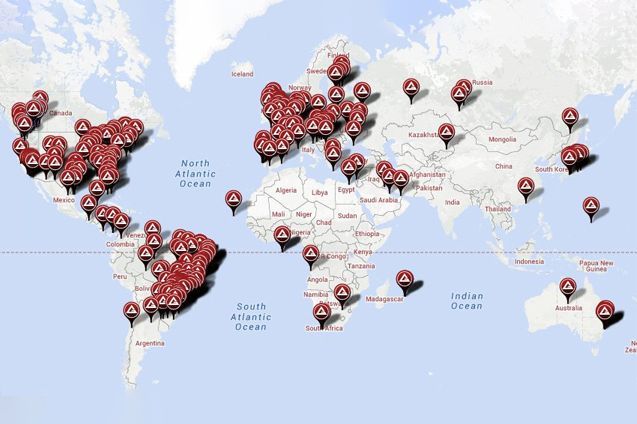
Gracie Barra is one of the world's largest and most respected Brazilian Jiu-Jitsu organizations. Founded in 1986 by Grand Master Carlos Gracie Jr. in Rio de Janeiro, it now has more than 1,300 schools across six continents. We're proud to represent that legacy here in Riverton. Read the full story.
What is the Gracie Barra philosophy?
Our motto is "Jiu-Jitsu for Everyone." We believe this art can transform anyone's life — whether you're a busy parent, a child, a professional, or an athlete. Our focus is health, well-being, self-defense, and community.
What makes Gracie Barra different from other Jiu-Jitsu schools?
We use a standardized, structured curriculum refined across more than 1,300 schools worldwide. Every class has a clear beginning, middle, and end, so you always know what you're learning. And we hold ourselves to high standards: clean mats, certified instructors, and a genuinely welcoming culture.
What programs does Gracie Barra Riverton offer?
Something for everyone: GBK for kids, GBF for women, GB1 Fundamentals (perfect for beginners), GB2 Intermediate and GB3 Advanced, No-Gi, and Private classes. There's also a teens program. See the full timetable.
Who are the instructors at Gracie Barra Riverton?
The team is led by Prof. Seidler Rodrigo Ziser, founder and Head Professor, a third-degree black belt and Gracie Barra North America Regional Leader for Utah. He teaches alongside Prof. Gabriel Weinem, Coach Pedro Santos (purple belt) and Coach Kaitlyn Ceballos (blue belt). Our instructors also cover classes at the other Gracie Barra schools in Utah, in Salt Lake City, West Jordan and Herriman, so you may see the same faces across the group. Every instructor here has completed Gracie Barra's Instructor Certification Program (ICP) and is trained in first aid and emergency response. They all teach the same Gracie Barra curriculum, with patience and clear instruction. Meet the team.
Does Gracie Barra Riverton teach self-defense or just sport BJJ?
Both, blended together. Self-defense is built into our curriculum from day one — not as a separate class, but as an integral part of every student's journey alongside sport technique.
Does Gracie Barra Riverton focus on producing competitors?
Our primary focus is you, the everyday student — learning self-defense, improving your health, making friends, and reducing stress. We do have an active competition team that we fully support, but competition is never the main point.
What is the Gracie Barra Red Shield?
The Red Shield is Gracie Barra's iconic logo, worn on every GB student's gi worldwide. It represents brotherhood, integrity, and community. Wearing it means you're part of a global family united by Jiu-Jitsu.
Can I drop into other Gracie Barra schools when I travel?
One of the best perks of our global network. When you travel to a city or country with a GB location, you're usually welcome to drop in as a visiting student. Contact that school ahead of time, since policies vary. It's one big family — see what each membership plan includes for visits.
Is Gracie Barra Riverton a family-friendly gym?
Completely. We have students from age 3 to 60+, entire families training together, and a culture that doesn't tolerate ego or disrespect. Bring your kids, your grandparents, your neighbors — everyone feels at home here.
Ages 16 and up
Brazilian Jiu-Jitsu for adults
More detail on the adult program is on the adults classes page.
I'm out of shape and haven't exercised in years. Can I start BJJ?
Absolutely. You don't need to be in shape to start — you get in shape by starting. Our GB1 Fundamentals program is designed for complete beginners with zero athletic background, and instructors will respect your fitness level and pace.
Am I too old to start jiu-jitsu?
There's no such thing as too old. People start in their 30s, 40s, 50s, and 60s and thrive. The art rewards patience and technique over raw athleticism, which often makes older practitioners more effective, not less. Our own head professor started as an adult, at 28.
What will I learn in the GB1 Fundamentals program?
GB1 is where every adult journey begins. You'll learn foundational techniques: real-world self-defense (like escaping a grab), core positions (guard, mount, side control), basic sweeps, and fundamental submissions. We focus on doing the basics exceptionally well. See the full breakdown.
How many days a week should I train as a beginner?
Two to three days a week is ideal — enough repetition to build muscle memory while letting your body recover. Jumping to five days a week as a beginner usually leads to burnout or injury. Check the timetable to find times that fit your week.
What is the BJJ belt order for adults?
White, then Blue, Purple, Brown, and Black. After black belt, practitioners earn degrees, then eventually Coral and Red belts — the highest honors, reserved for the pioneers of the art.
How long does it take to earn a blue belt?
For a consistent student training two to three times a week, typically 1.5 to 2.5 years. Blue belt signals a solid grasp of the fundamentals. Promotions here are based on demonstrated skill and character, not just time served.
How long does it take to get a black belt?
On average, 8 to 12 years of dedicated training. It's a long, beautiful journey — and the person you become along the way is the real reward.
Is Jiu-Jitsu good exercise?
It works the whole body. A single session hits cardio, strength, flexibility, and coordination, and it asks a lot of your head too. How much you get out of it depends on how often you train, but students who come regularly tend to notice it in everything else they do.
Is Brazilian Jiu-Jitsu good for relieving work stress?
It's one of the reasons a lot of our adult students keep showing up. Training takes your full attention — you can't run through tomorrow's meeting while someone is working to pass your guard. That hour of forced focus is what most people are really coming for.
Do I have to compete?
Never. Competition is completely optional. The vast majority of our students train for health, self-defense, and lifestyle. If you ever want to test yourself, we'll prepare you fully — but it's your journey. More on competing.
What are the most common injuries in BJJ?
Most common are finger sprains, knee strains, and neck soreness. Best prevention: tap early, communicate with partners, warm up properly, and check your ego at the door. Training smart dramatically reduces risk.
Can I train BJJ if I have a bad back or bad knees?
Many practitioners with previous injuries train successfully. Always consult your doctor first, then talk openly with your instructor. A good instructor will modify training around your limitations and help you build strength over time. Private classes are a good way to rebuild carefully.
Is it normal to feel sore after the first few classes?
Completely normal. BJJ wakes up muscles you forgot you had. That soreness in the first few weeks is your body adapting and getting stronger — it fades quickly as you condition.
What is "cauliflower ear," and will I get it?
That's swelling caused by repeated friction over years, mostly in people who train and compete hard. For recreational students it's uncommon. If your ear ever gets sore, an ear guard during class keeps the rubbing off it while it settles down.
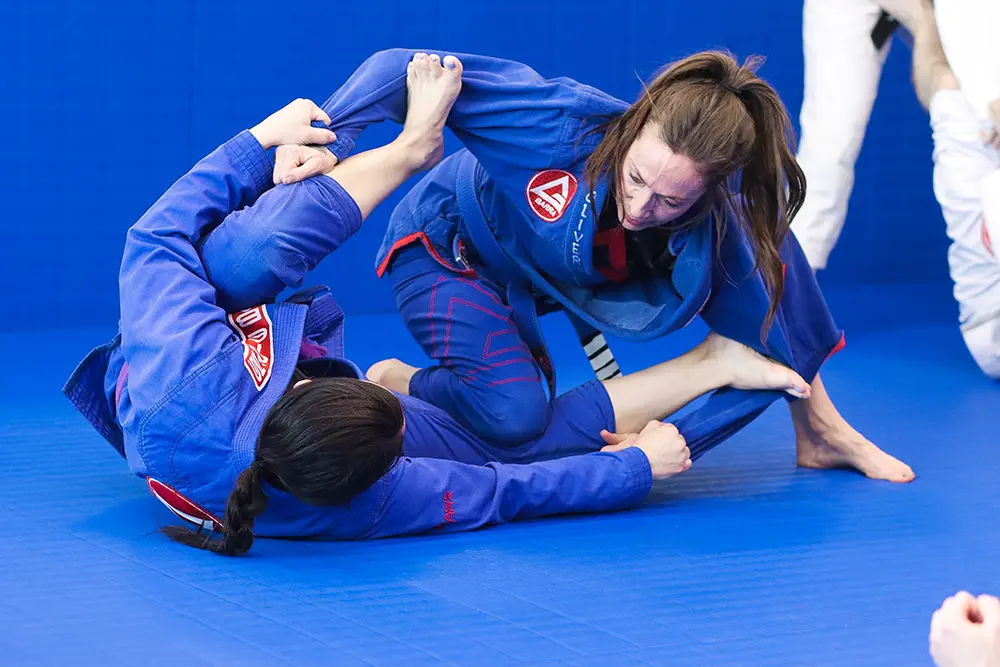
Is jiu-jitsu actually effective for women's self-defense?
It's widely considered one of the most effective self-defense systems for women. That's the problem the whole system was built to solve. Instead of meeting force with force, you learn to use leverage, angles and your own body weight. A smaller person can control someone much bigger that way. One of our own instructors regularly competes against opponents 20 to 60 pounds heavier and wins.
I'm a woman with no martial arts experience. Can I start BJJ?
Yes, absolutely. Every white belt starts at zero. Our GBF program is designed for women with no prior experience — structured, supportive, and progressive.
Do you have women-only classes?
Women's Jiu-Jitsu options can change as the schedule evolves. Please contact our front desk at (801) 436-7373 to learn more about the current women's Jiu-Jitsu class options.
What are the physical benefits of BJJ for women?
A single class works your whole body — legs, core, arms, and back. A class mixes constant movement with full-body resistance, so you train cardio and strength in the same hour. How much that adds up to depends on your size, your effort, and how often you train. Students who come regularly tend to notice gains in stamina, strength, and flexibility.
Will BJJ help me lose weight?
It can help. Training combines sustained cardio with full-body resistance work, so you're burning energy and building muscle in the same session. Weight change also depends on nutrition, sleep, and plenty of things outside the gym, so BJJ works best as one part of the picture rather than the whole answer.
Is it uncomfortable training in close contact with men?
It's normal to feel hesitant at first. But our culture of respect is non-negotiable — everyone treats partners professionally and safely, and most women find any discomfort fades within the first few sessions. Starting in our women's program is a great way to build comfort first.
How does BJJ help with mental health and daily stress?
The hour asks for enough of your attention that the rest of the day has to wait. Many of our students say the routine matters as much as the training — a set time each week, with people they have come to know. It won't fix what's waiting outside, but it gives you a break from carrying it.
I'm not flexible at all. Can I still do jiu-jitsu?
Absolutely. Nobody arrives flexible — you become flexible through training. The movements of BJJ naturally improve your range of motion over time. The training is what gets you ready.
Can I train during my period?
That's completely your call. Many of our students keep training and find that exercise actually eases cramps. If you're low on energy, take it easy — listen to your body.
Will BJJ make me look too muscular or "bulky"?
Not at all. BJJ tones and defines muscle while reducing body fat, giving you a strong, lean look. Getting bulky requires heavy weightlifting and a specific diet, so it's not something to worry about here.
Can pregnant women continue jiu-jitsu?
Once you know you're pregnant, stop live sparring (rolling). Many instructors can modify technique drilling for pregnant students. Always consult your doctor first, and let us know so we can support you appropriately.
What should a woman wear to a jiu-jitsu class?
Just bring a water bottle, and leave any jewelry at home for safety. Your first class is free, and we'll provide a loaner Gi. No purchase is required before you start.
Does BJJ help reduce fear when walking alone or in unsafe situations?
Significantly. It doesn't make you invincible, but it gives you real tools — how to break a grip, create distance, and control a situation long enough to escape. That produces a calm, grounded confidence that changes how you move through the world.
I'm over 40. Is it too late to start jiu-jitsu?
Not at all. Plenty of our students started at 40 or later. What changes isn't whether you can train, it's how: you warm up with more care, you choose your partners, and you let technique do the work that speed used to do. Our GB1 Fundamentals program is built to move at your pace.
How is BJJ different from a standard women's self-defense class?
Most self-defense classes teach isolated techniques in scripted scenarios — and when real adrenaline hits, that technique often evaporates. BJJ builds real muscle memory through live practice against resisting partners, so the skills actually stick when you need them.
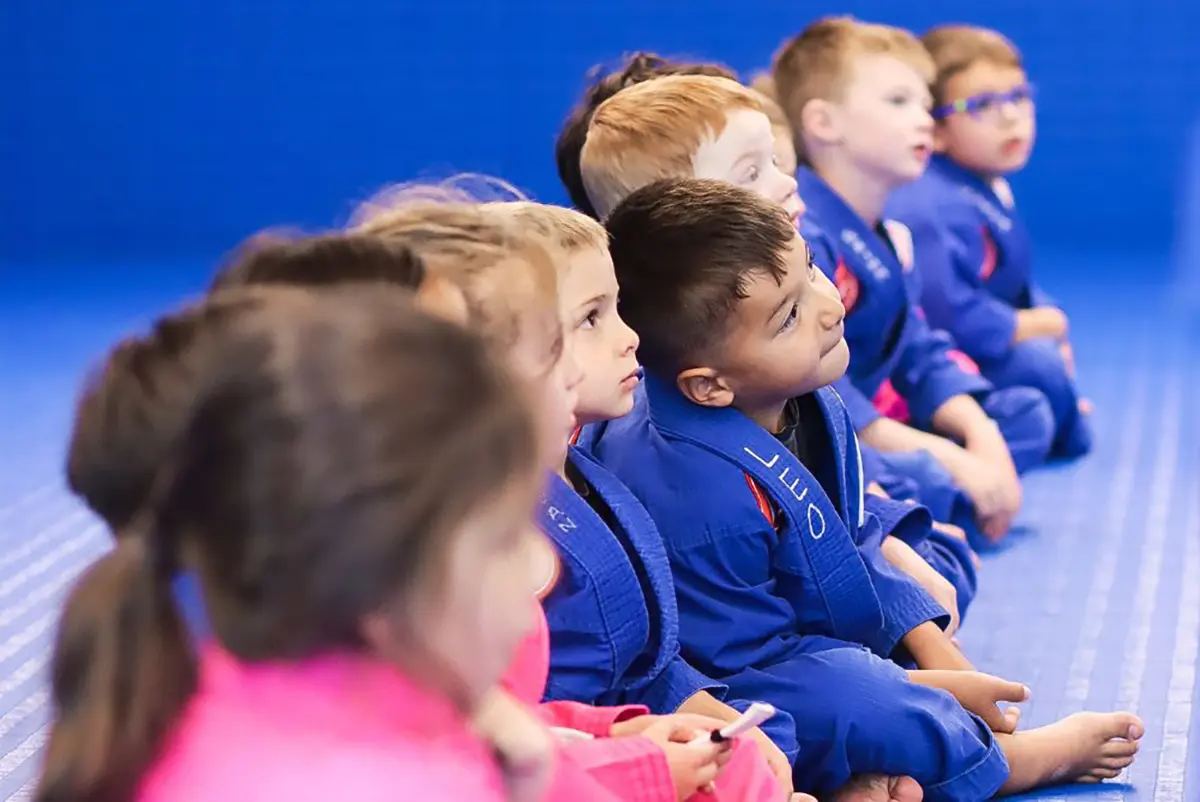
What age can kids start jiu-jitsu at Gracie Barra Riverton?
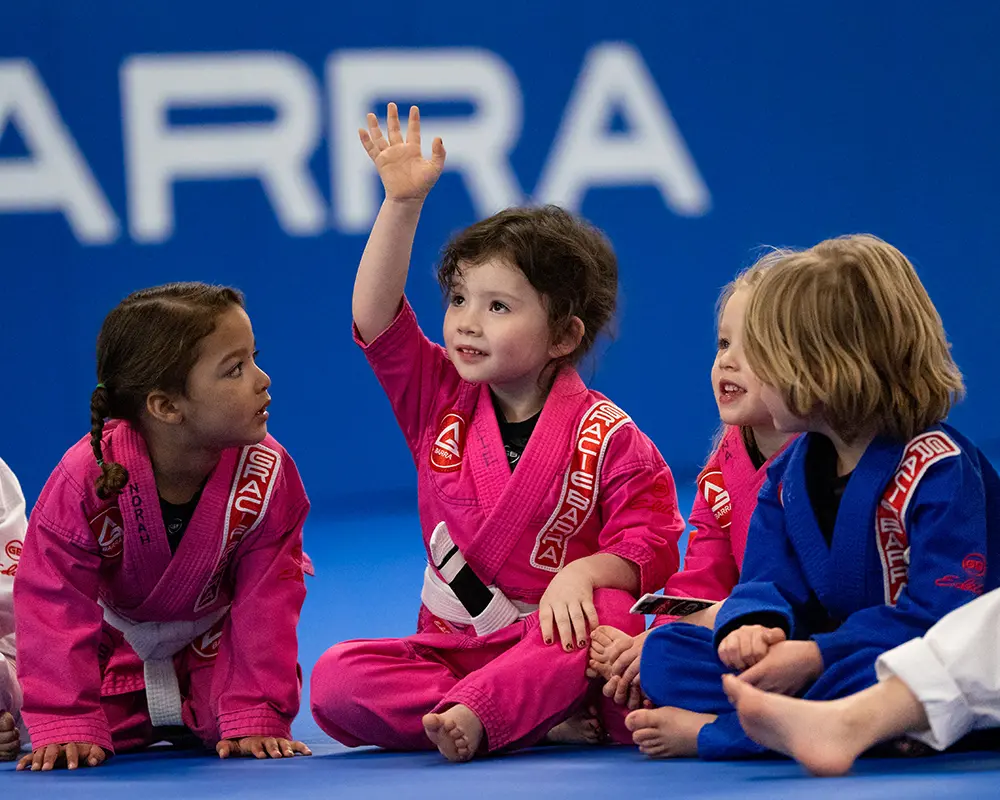
Kids can start at 3 years old, as long as they're potty trained. That first step is our GBK program, grouped by age: Tiny Champs (3-4), Little Champs 1 (5-6), Little Champs 2 (7-9), and Juniors and Teens (10-15). Our youngest students focus on having fun while developing motor skills, balance, coordination, and social skills through games and structured play.
Is jiu-jitsu safe for children?
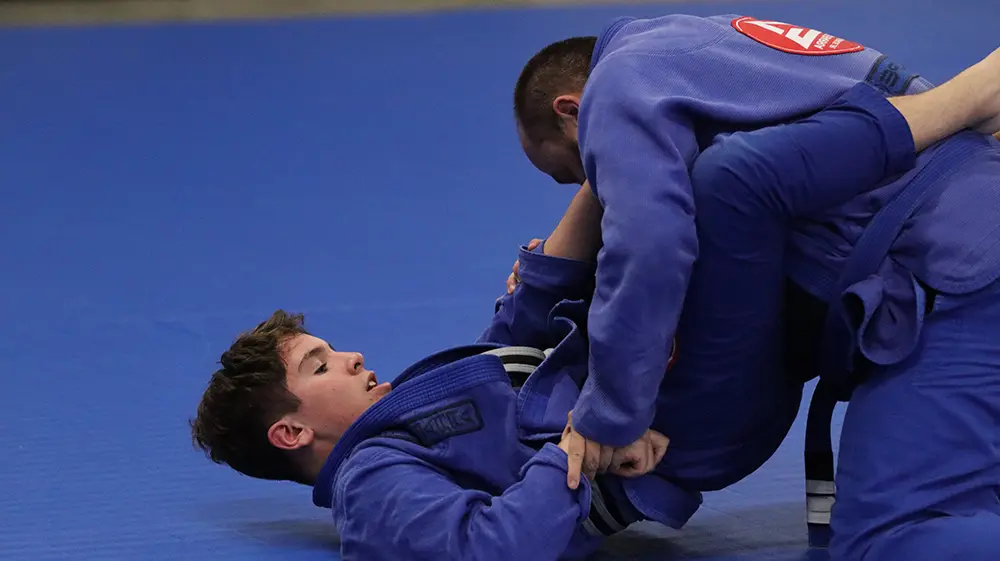
It's designed to be. There's no punching or kicking in our kids' classes — it's grappling and partner work on padded mats, with instructors managing who trains with whom. All of them are trained to teach children, and all hold current first-aid and emergency training. It's still a physical sport, so sore muscles and the occasional bump come with it, but the risks that come with striking aren't part of the picture.
How does jiu-jitsu help my child deal with bullying?
Jiu-Jitsu gives kids two powerful things: real confidence and real technique. We teach them to use their words and posture first, tell a trusted adult second, and only use physical skills as an absolute last resort. Confident, grounded kids tend to avoid bullying situations altogether. Read more on how we handle it.
What are the biggest benefits of jiu-jitsu for kids?
Brazilian Jiu-Jitsu gives children repeated chances to practice a skill, solve a problem under pressure, and work with a partner who is trying too. On the physical side that builds coordination, balance and body awareness. On the other side it builds patience and a tolerance for getting things wrong. At Gracie Barra Riverton those repetitions happen inside a structured kids curriculum with an instructor watching. How much a child carries home varies from child to child.
How does the belt system work for kids?
Kids progress through a fun, colorful belt system: White, then Gray, Yellow, Orange, and Green. Each belt celebrates their growth in technique and character, and we make promotions a big team celebration.
Does my child have to compete?
Not at all — competition is completely optional. If your child wants to compete, we'll support them fully. But our main focus is always self-defense, health, fun, and character development, not trophies. How competing works here.
Is jiu-jitsu good for kids who have a lot of energy or trouble focusing?
It gives that energy somewhere to go. A class has a clear shape — line up, warm up, drill, practice with a partner, bow out — and the structure does a lot of the work on its own. Kids wait their turn, listen to one instruction, then try it. Plenty of parents tell us they notice it at home too, though how much and how fast varies from child to child.
Can my daughter train in kids' jiu-jitsu classes?
Absolutely. Our kids' classes are co-ed, and girls thrive in them — building fitness, learning self-defense early, and growing with incredible confidence. Many of our best young students are girls.
What should my child wear to the first class?
Just bring a water bottle, and trim their nails before you come. Your child's first class is free, and we'll provide a loaner Gi. No purchase is required before you start.
What's the difference between kids' Brazilian Jiu-Jitsu and karate or taekwondo?
Karate and taekwondo focus on striking. Jiu-Jitsu focuses on takedowns and ground control with zero striking, which means kids can train at full effort against a resisting partner without risk of getting hit. The confidence they build is based on real, working technique.
Will jiu-jitsu affect my child's growth or physical development?
Quite the opposite. Regular, guided physical activity promotes healthy bone and muscle development. Our instructors respect each child's physical limits and teach at a pace perfect for their age and body.
How does a jiu-jitsu class teach discipline?
Discipline is built into the class structure. Kids learn to line up, bow respectfully, keep their uniforms neat, and listen during instruction. They also learn to win with humility and lose with grace — lessons they carry into school and home.
My child has special needs. Can they train jiu-jitsu?
We're proudly an inclusive academy and believe Jiu-Jitsu offers wonderful benefits for children with various needs — cognitive, motor, and social. Please contact us before your first visit so our instructors can prepare the best possible experience.
How many days a week should my child train?
Two to three times a week is the perfect balance for most kids — enough to build real skills and a routine, without making training feel like a chore. See the class times.
How do I get my child started at Gracie Barra Riverton?
Super easy: book a free trial class or reach out. We love showing families around, answering questions, and letting your child feel the energy of the mat first.
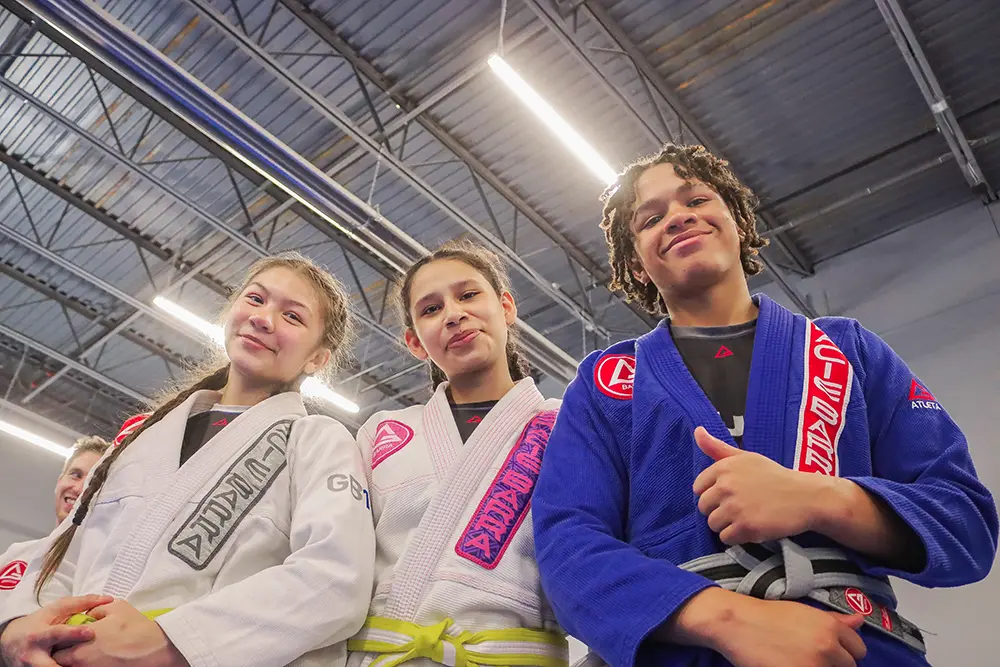
Is jiu-jitsu a good sport for teenagers?
It fits the age well. The teen years are full of energy and change, and a structured class gives teens a physical outlet, a peer group built around effort rather than status, and progress they can measure week to week. Fitness and mental toughness come along with it.
Can a teenager with zero experience start Brazilian Jiu-Jitsu?
Absolutely. Most teens start with zero experience, and that's totally normal. Our instructors teach every technique from scratch, and beginners are always supported. Your teen can even bring a friend to a free trial.
Does jiu-jitsu help with teenage anxiety and stress?
Exercise and routine help a lot of teenagers, and the mat gives both. A class asks for enough attention that school and social pressure have to wait an hour, and most teens leave looser than they arrived. It isn't treatment, though. If your teen is carrying anxiety that goes past a rough week, that's worth taking to a doctor or counselor too.
Will my teenager learn real self-defense?
Yes. Teens learn to use leverage and technique to handle someone bigger and stronger. What usually changes first is how they carry themselves. Day to day, that shift matters more than any single move.
Will my teen train with adults in the same class?
We have a dedicated teens program, so they train with their peers. Our Juniors and Teens program runs to age 15; from 16, depending on skill and maturity, we help them safely transition into adult classes. Our instructors carefully manage pairings so everyone stays safe.
At what age can a teenager earn a blue belt?
Per IBJJF rules, students must be at least 16 to earn a blue belt. Before that, teens progress through youth belts (gray, yellow, orange, green). Earning blue as a teen is a huge achievement, and we celebrate it big.
Is jiu-jitsu safe for teenagers? What about injuries?
Like any sport, bumps happen. What makes BJJ safer than it looks is the tap: a partner taps, you let go, and the round stops there. Teens learn that on day one, before any technique. Instructors run the rounds and step in when a pairing needs changing.
How does jiu-jitsu build character in teenagers?
On the mat, everyone is equal. Teens learn that effort produces results, that mistakes are part of learning, and that respecting partners is non-negotiable. These lessons stick for life.
Will jiu-jitsu hurt my teenager's grades or school schedule?
Usually the opposite. A few hours a week is a small slice of the schedule, and the habits the mat asks for — show up, pay attention, finish what you started — are the same ones school asks for. Teens who train regularly often sleep better too, though that varies as much as anything else.
Will jiu-jitsu make my teenager more aggressive?
Not at all. Teens channel their energy into the sport and develop real self-control. When you know you can handle yourself, you don't feel the need to prove it. Our students are known for being respectful, calm, and mature.
My teenage daughter wants to train. Is it welcoming for girls?
Absolutely. Teen girls are equally valued and many are standout students. The fitness, self-defense skills, and confidence boost are especially meaningful during adolescence.
Does a teenager need to be athletic or strong to start BJJ?
Not at all. Jiu-Jitsu was designed so a weaker person can defeat a stronger one using technique. Strength and conditioning come naturally through training — they don't need to arrive with them.
How does jiu-jitsu help a teen who wants to do MMA one day?
BJJ is the foundation of modern MMA grappling — nearly every top fighter trains it. Starting as a teen gives an enormous head start on ground skills and mental toughness that translate perfectly to MMA. No-Gi is the closest bridge.
Can teens compete in jiu-jitsu tournaments?
Yes. There are youth and teen divisions at IBJJF, NAGA, and local tournaments, organized by age and weight for fair competition. We fully support competitive students — though competition is always optional.
How much does BJJ cost for a teenager at Gracie Barra Riverton?
Monthly tuition varies by program. Check our membership page for current pricing and promotions, and start with a free trial class.
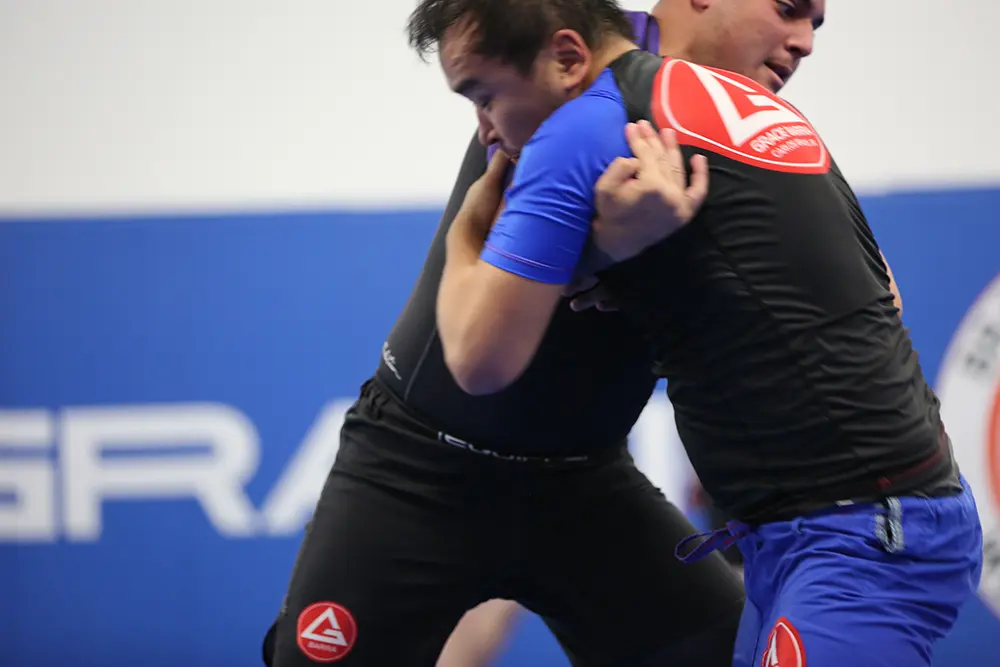
What is No-Gi jiu-jitsu?
No-Gi is Brazilian Jiu-Jitsu trained without the traditional kimono — in a rash guard and shorts. Without fabric to grip, the pace is faster and relies more on body control and locks. It's the same core Jiu-Jitsu, and it's the grappling style you see in modern MMA.
What's the difference between gi and No-Gi jiu-jitsu?
Gi BJJ uses a traditional kimono, where you grip the fabric as part of technique. No-Gi uses a rash guard and shorts — without fabric to grab, it's faster and relies more on body locks. Both are valuable, and we offer both here. See the full comparison.
Does Gracie Barra Riverton have No-Gi classes?
Yes. No-Gi training (rash guard and shorts, no kimono) is available for students in the GB2 Intermediate and GB3 Advanced programs. It's a great complement to gi training and an excellent bridge to MMA or submission grappling. Check the timetable for current no-gi times.
Is No-Gi good for wrestling or MMA?
Definitely. No-Gi shares a lot with wrestling — takedowns, body locks, and scrambles — and it's the grappling foundation of mixed martial arts. If MMA or wrestling interests you, No-Gi is a great fit.
Is No-Gi good for beginners?
No-Gi at Gracie Barra Riverton is open to students in the GB2 Intermediate and GB3 Advanced programs, so it isn't where brand-new students begin. If you're new, you'll start in GB1 Fundamentals and move into No-Gi once you've built a base of positions and movement.
What are private classes?
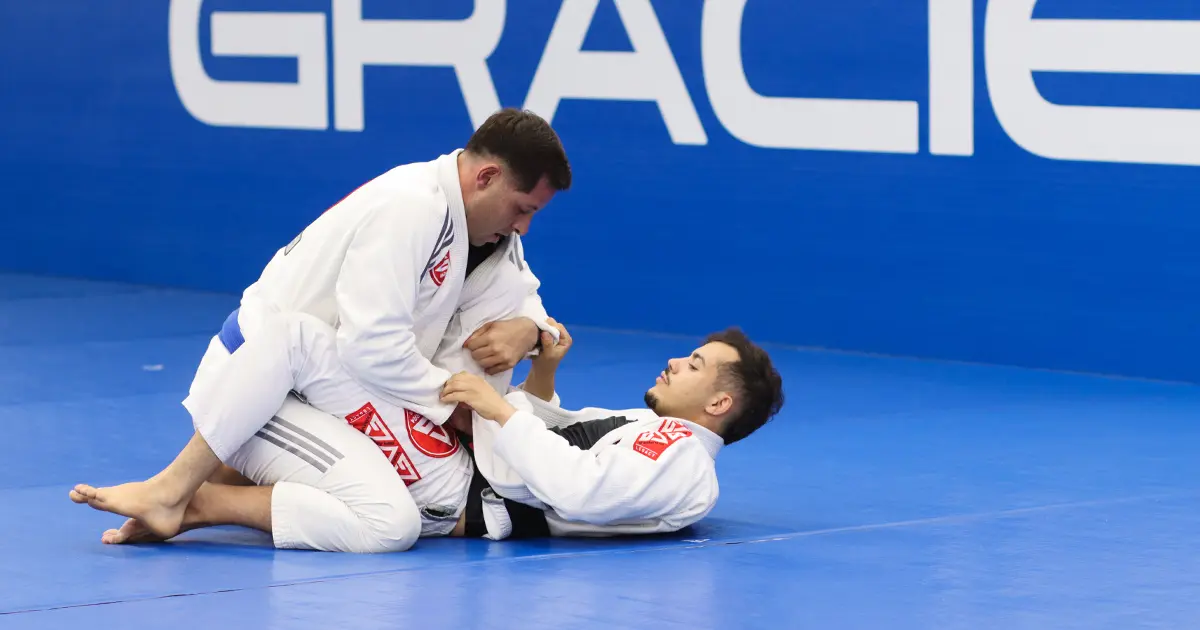
Private classes are one-on-one sessions with an instructor, focused entirely on you. You decide what the hour covers. It might be a position you keep getting stuck in, a competition you're getting ready for, or just the basics with no one else in the room.
Who are private classes for?
Everyone — complete beginners who want a confident head start, busy adults whose schedules don't fit group times, and experienced students refining technique or preparing for competition.
I can't make the group class times. Can I still train?
Yes. Private classes flex around your schedule, so you can train when it works for you, even when the regular group times don't fit.
Do private classes help me progress faster?
Yes. With an instructor focused only on you, there's no waiting and no split attention, so you tend to improve quickly.
How do I book a private class?
Just reach out — tell us your goals and a time that works, and we'll match you with the right instructor. You can also ask about semi-private sessions for you and a partner, spouse, or friend.
What does "jiu-jitsu" actually mean?
The words come from Japanese: Jiu (gentle, flexible) and Jitsu (art or technique) — "The Gentle Art." The name reflects our philosophy: using flexibility, intelligence, and leverage to overcome brute force.
What is the difference between Japanese jiu-jitsu and Brazilian jiu-jitsu?
Japanese Jiu-Jitsu is a centuries-old samurai system covering striking, weapons, throws, and grappling. Brazilian Jiu-Jitsu evolved from Judo and narrowed its focus to ground fighting and submissions — far more specialized, and heavily tested through decades of live sparring.
How did jiu-jitsu arrive in Brazil?
A Japanese Judo master named Mitsuyo Maeda (nicknamed "Count Koma") traveled to Brazil in the early 1900s and taught the art to a young Carlos Gracie, who then passed it to his brothers. That single encounter changed martial arts history forever. Read the full timeline.
What was the contribution of Carlos Gracie and Hélio Gracie to Brazilian Jiu-Jitsu?
Carlos Gracie was the first to learn from Mitsuyo Maeda and began teaching his brothers, including Hélio. While Carlos was stronger and used force, Hélio — being small and frail — couldn't, so he adapted the techniques to use body weight, leverage, and mechanics instead of brute strength. Together they revolutionized the art and proved that anyone, regardless of size, could master it. That idea is the essence of the Jiu-Jitsu we practice today.
Is jiu-jitsu better than boxing or Muay Thai for self-defense?
They serve different domains. Boxing and Muay Thai are excellent for stand-up striking, but most real-world altercations involve grabbing and end up on the ground — and the ground is what Jiu-Jitsu is built for. Many experts recommend learning both a striking art and BJJ for complete self-defense.
Brazilian jiu-jitsu vs. wrestling: which is better for self-defense?
Both are highly effective. Wrestling dominates in takedowns and top control; BJJ adds a deep submission arsenal of chokes and joint locks, making it more dangerous in prolonged grappling. Many practitioners cross-train both, and our curriculum includes wrestling-based takedowns alongside core BJJ.
What is the difference between Brazilian jiu-jitsu and judo?
Judo focuses heavily on throwing — getting the opponent to the ground in a controlled, explosive way. BJJ focuses on what happens after: ground control and submissions. Many BJJ practitioners cross-train judo for better takedowns.
Is BJJ the same as MMA (UFC)?
No. MMA combines boxing, Muay Thai, wrestling, and BJJ, with striking and grappling all allowed. Sport BJJ focuses exclusively on grappling and submissions, with no striking. BJJ is one of the most important components of MMA, but they're different activities.
Does jiu-jitsu include punching or kicking?
Standard sport BJJ does not include strikes. However, our self-defense curriculum does teach how to defend against punches — how to manage distance, block, and tie up an attacker so you can control the situation safely.
What is a "submission" in jiu-jitsu?
A submission is the "checkmate" of BJJ — a technique (usually a choke or joint lock) applied so effectively that your opponent can't escape and taps out. Common ones include the rear-naked choke, armbar, triangle choke, and guillotine.
What is a guard in jiu-jitsu?
The guard is a position where you're on your back, using your legs to control the person on top. Far from weak, it's one of BJJ's great innovations — from your back you can attack with sweeps, submissions, and reversals. Variations include closed, open, De La Riva, spider, and half guard.
What does "passing the guard" mean?
Passing the guard means maneuvering past your opponent's legs (while they're on their back) to reach a more dominant position at their side. It's a key moment in a match and worth points in competition.
Why do people say "Oss" in a jiu-jitsu class?
"Oss" is a term of Japanese origin used to mean many things — hello, thank you, I understand, or simply respect. You'll hear it when greeting the instructor, stepping on the mat, or acknowledging a technique. It's the universal mat salute.
Why is jiu-jitsu called "human chess"?
Because success depends on strategy and anticipation, not just strength. You think two moves ahead — set a trap, fake one direction, flow into a submission off the reaction — using your opponent's energy against them. It's as much a mental workout as a physical one.
What is the mount position in jiu-jitsu?
The mount is when you sit on top of your opponent's torso while they're flat on their back. It's one of the most dominant positions in BJJ, giving you access to chokes, armbars, and other attacks with a big mechanical advantage.
Are chokes dangerous?
They're treated seriously, which is exactly what keeps them safe to train. A BJJ choke works on the arteries at the sides of the neck, not the airway, so what you feel is pressure building rather than the panic of not being able to breathe. You tap, your partner lets go. Beginners learn to tap early, instructors watch the rounds, and the whole culture is built around stopping the moment someone taps.
What should I do if I'm attacked by multiple people on the street?
Run if at all possible. BJJ is built for one-on-one situations, and going to the ground against one person while others stand around is dangerous. Against multiple attackers, the best strategy is always to create distance and escape. We teach awareness and de-escalation alongside physical technique.
What is the difference between a black belt, coral belt, and red belt?
The black belt is the first rank of mastery, earned after roughly 10 years. The coral belt (red and black, or red and white) goes to practitioners who've held a black belt for decades and made major contributions to the art. The red belt is the highest honor in BJJ, reserved for the founding pioneers and grandmasters.
What are IBJJF and CBJJ?
The IBJJF (International Brazilian Jiu-Jitsu Federation) and CBJJ (Brazilian Jiu-Jitsu Confederation) are the main governing bodies of competitive BJJ. They organize the sport's most prestigious events, including the IBJJF World Championships.
Is Brazilian jiu-jitsu an Olympic sport?
Not yet, but the movement is growing. BJJ's global popularity has exploded over the past decade, with an active push for Olympic inclusion. For now, the IBJJF World Championships and ADCC remain the sport's highest competitive stages.
Didn't find it?
Still have questions?
We're happy to help — and we love talking Jiu-Jitsu. Call us, or come see the place for yourself with a free class.
Answers reviewed by the Gracie Barra Riverton instructional team. Last reviewed: August 2026.