
Skip to content

Adult classes • Riverton, Utah

Adult Jiu-Jitsu classes in Riverton

Ages 16 and up. Get fitter, clear your head, and learn to defend yourself, one hour at a time.

You will get in shape without ever setting foot on a treadmill, learn a self-defense system that works, and get an hour where nothing from work can reach you. Most adults here walked in with no martial arts background at all. You start at the beginning and go as far as you want, six days a week.

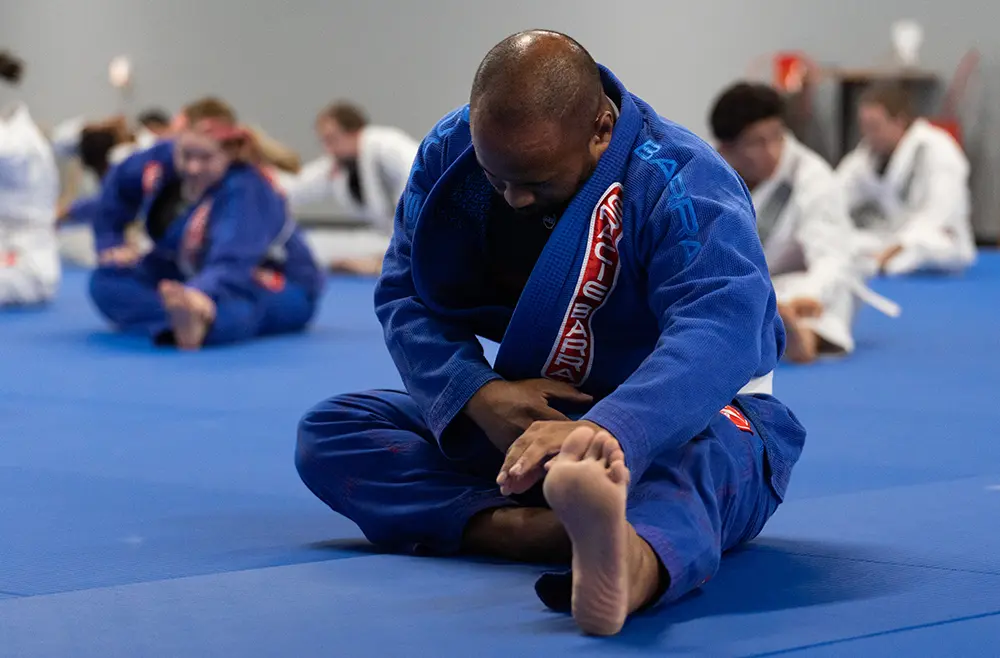
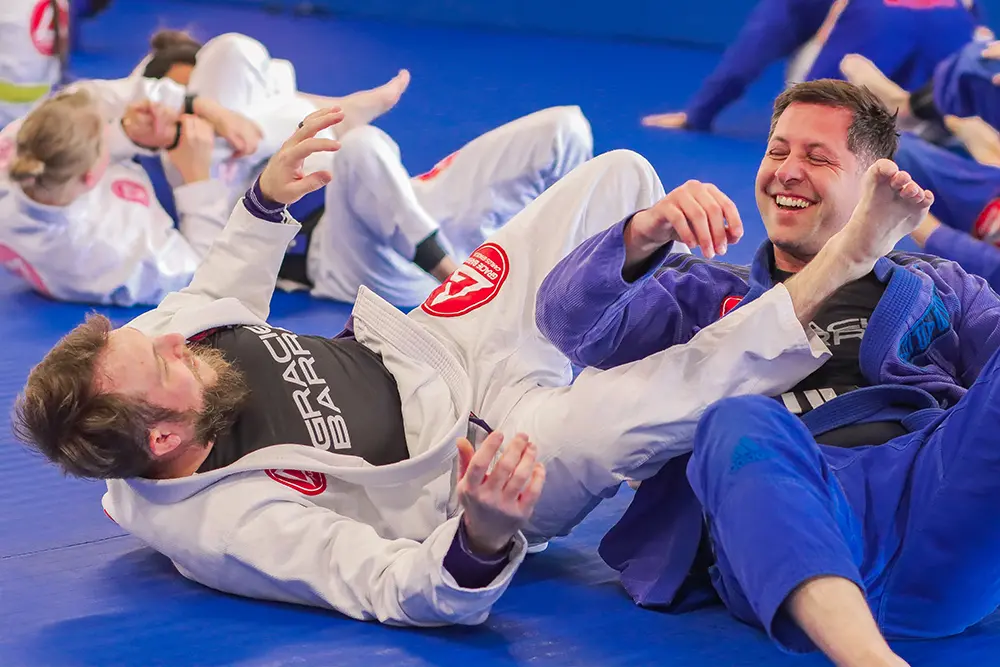
Adults training Brazilian Jiu-Jitsu at Gracie Barra Riverton in Riverton, Utah

How adult training is structured

Fundamentals first. Intermediate when you're ready.

Every adult starts from zero in GB1 Fundamentals and follows a complete, step-by-step curriculum. As your skills and confidence grow, the program naturally guides you into GB2 Intermediate, with each stage building on what you learned before.

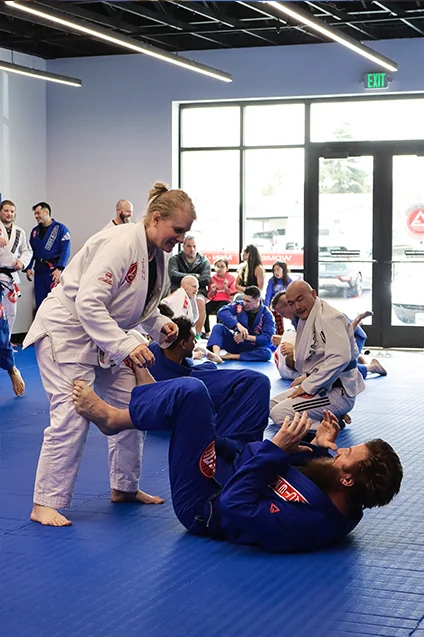
Adults drilling technique in a Fundamentals Jiu-Jitsu class at Gracie Barra Riverton

Fundamentals

Ages 16+ • no experience needed

This is where every adult begins, whether you've never touched a mat or you trained years ago and want the basics rebuilt properly. Nothing is assumed. Every technique is broken down from zero, and the whole room is doing the same thing you are.

  • The positions. Guard, mount, side control, and back control. What each one is, why it matters, and what you're supposed to do from there.
  • How to get out. Escapes come before attacks. Learning to be comfortable in a bad position is what makes the rest possible.
  • How to move. Shrimping, bridging, standing up safely. Unglamorous, and the foundation of everything.
  • One technique at a time. The instructor demonstrates, you drill it with a partner, and they correct you while you do it.
  • Live training comes gradually. It is added as your technique develops, at the pace that suits you.
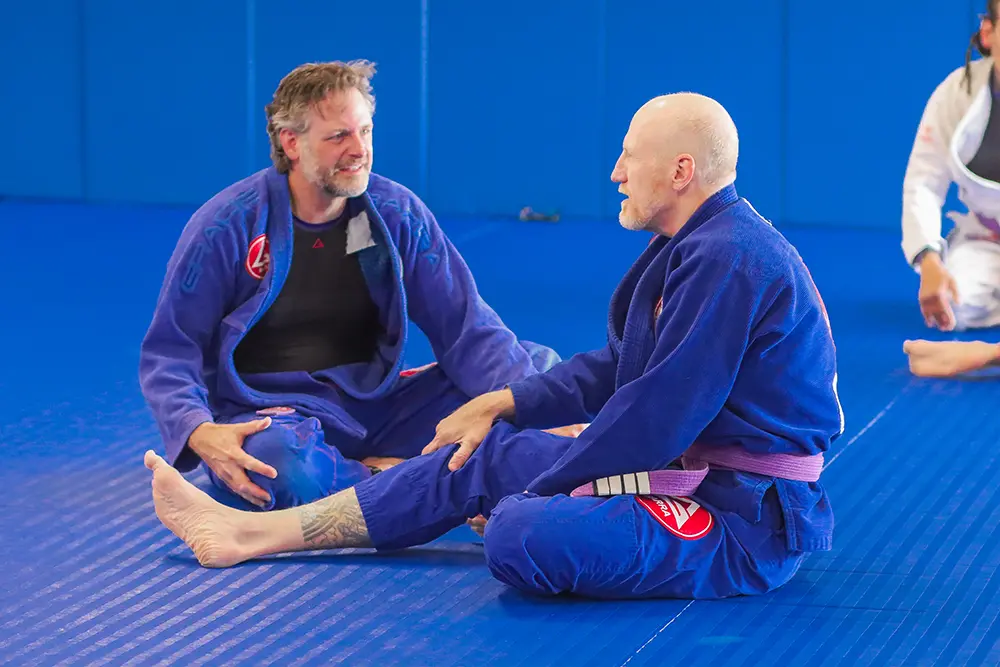
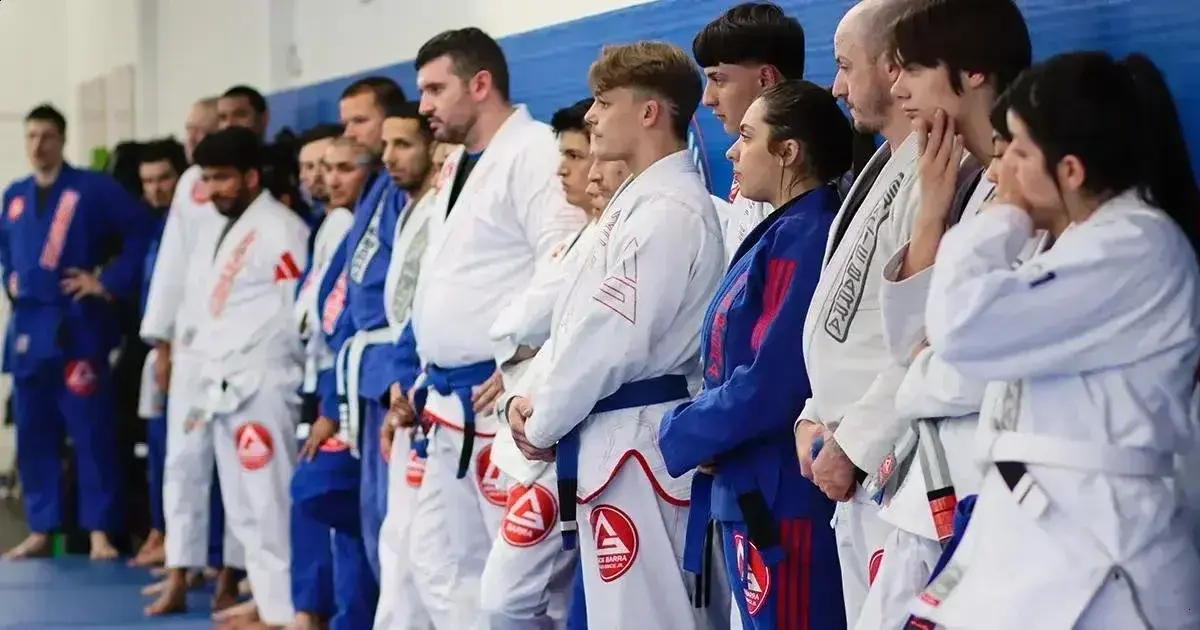
Intermediate adults Jiu-Jitsu training at Gracie Barra Riverton

Intermediate

Ages 16+ • from White Belt 3rd degree

When the basic movements start happening without you thinking about them, you move up. GB2 is where the learning gets faster, because you stop practicing techniques in isolation and start using them against someone who knows what you're trying to do.

  • Combinations, not single moves. What to do when the first attempt fails, which is most of the time.
  • More live training. Real resistance, at a pace you and your partner set together.
  • Details that change everything. The grip, the angle, the half-second of timing that makes a technique work on someone who's expecting it.
  • Fundamentals never stop. Students at every level still train GB1. Black belts still drill escapes.

The next stage

GB3: the advanced stage of the adult program.

GB3 is where the adult curriculum goes deepest. Finer technical detail, higher intensity, and longer live training, built for students who already move well and want to sharpen what they have rather than add more to it.

From blue belt onward, GB3 becomes part of your training. Your fundamentals are solid by then, and this is where the curriculum takes you next, at a pace that matches what you have already built.

What actually happens

An adult class, start to finish.

About an hour. Here's the shape of it, so nothing catches you off guard.

1

Warm up with the class

A specific warm-up that prepares your body for the techniques you are about to train, led by the instructor along with the rest of the class.

2

Techniques of the day

The instructor demonstrates and breaks it down piece by piece. Everyone in the room is learning the same thing, including the students who have been here for years.

3

Drill it with a partner

You take turns doing the technique slowly, without resistance, until it starts to feel less strange. This is where most of the learning happens.

4

Apply it with light resistance

Positional training from a specific starting point, so you find out what actually works. Your partner cooperates enough for you to learn.

5

Live rounds, where it comes together

This is where you put the positions you have been drilling into practice against a partner who is working too. It is the part most students end up looking forward to.

6

Line up and go home

The class finishes together. You'll be tired in a way that feels good, and you'll have learned something you can name.

Why adults keep training

What you actually get out of it.

People come for one of these and stay for the others.

Conditioning without a treadmill

An hour of Jiu-Jitsu is a full-body workout that never feels like exercise, because your attention is on the problem in front of you. You build strength, mobility, and cardio as a side effect of trying to solve it. The change usually shows up in how you move rather than on a scale.

Self-defense you've actually tested

Jiu-Jitsu is built on leverage and position, so a smaller person can control a larger one. What makes it different from most martial arts is that you practice against someone genuinely resisting. You find out what works and what doesn't, in the room, instead of hoping.

Adult friendships, which are hard to find

You train with the same people every week, you help each other get better, and nobody cares what you do for a living. For a lot of our members that turns out to be the part they didn't expect and can't replace.

Calm under pressure

Being stuck under someone bigger and learning to breathe, think, and work your way out is a skill. It transfers. Adults who train regularly tend to say they react differently to stress off the mat, and that's not an accident.

Something to get better at

Most adult life has no visible progress bar. This does. Stripes, belts, and the specific day a technique finally works on someone who saw it coming. Having one thing you're measurably improving at changes how the rest of the week feels.

An hour where work disappears

You cannot think about a deadline while someone is passing your guard. That forced focus is why so many adults describe training as the best stress relief they've found, and why the bad days are often the ones worth showing up for.

The honest answers

What's really stopping you?

These are the six things adults tell us on the phone before they book. Here's the truth on each one.

"I'm too out of shape to start."

Nobody arrives in shape. You build the conditioning through the training itself, and you set your own pace from the first minute. Stop, breathe, sit out a round. There is no fitness test to get in and nobody is timing you.

"I'm too old for this."

Our mats hold students in their twenties, thirties, forties and fifties, all training in the same room and all progressing at their own pace. That is the part people do not expect: there is no class average to keep up with, and nobody is measuring you against anyone else. Our own head professor started at 28, overweight and with high cholesterol, and went on to a black belt and a competition career. Read his story.

"Everyone there will be better than me."

Every black belt in that room started from zero, on a day exactly like your first one, and they remember it clearly. You will train alongside plenty of other beginners and white belts, so you will be in good company. The higher belts are the ones most likely to help you, because helping is how they got there.

"I'm worried about getting hurt."

Training is controlled and safety comes first. You work with certified instructors and partners who look out for you. A tap from either person ends the exchange immediately, every time, no questions. And you never spar harder than you choose to.

"I don't have the time."

Classes run six days a week, with morning, midday, and evening options, so most schedules find a gap. Two or three times a week is a great start and even one class a week builds real progress. View schedule.

"I don't want to compete."

You do not have to, and most of our adult members never do. That said, students who choose to compete often describe it as one of the most challenging and rewarding things they have done here, and our coaches will tell you honestly when the moment is right. It stays your call, whenever you want to make it. How competing works here.

A small perk worth knowing

Your training travels with you.

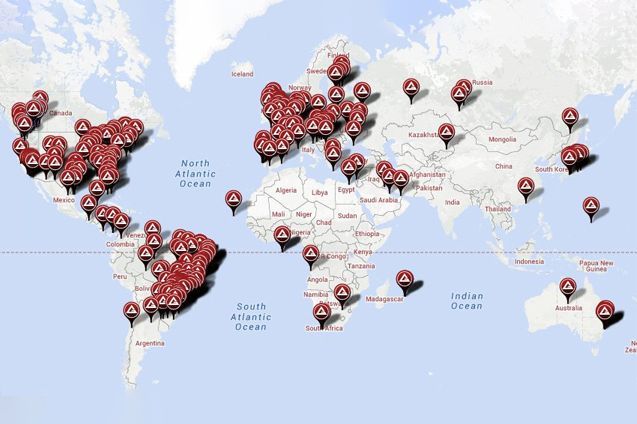
Gracie Barra's curriculum is standardized across 1,300+ schools, so if you train at a Gracie Barra in another city, you can step into the class and follow it without missing a beat. Same programs, same codes, same structure.

Every membership includes one visit per week at any other Gracie Barra school, and our Shield and Legacy plans add unlimited training at Gracie Barra Salt Lake City, West Jordan, Herriman, and Riverton. Useful on a work trip, and useful when you're closer to another location on a given day.

Gracie Barra has schools in dozens of countries, so this is less rare than it sounds. See what each plan includes.

Map of Gracie Barra schools around the world

Inside the academy

The room you'd be training in.

Adults on the mats, on an ordinary week.

Adults training Brazilian Jiu-Jitsu at Gracie Barra Riverton
Instructor coaching an adult student at Gracie Barra Riverton
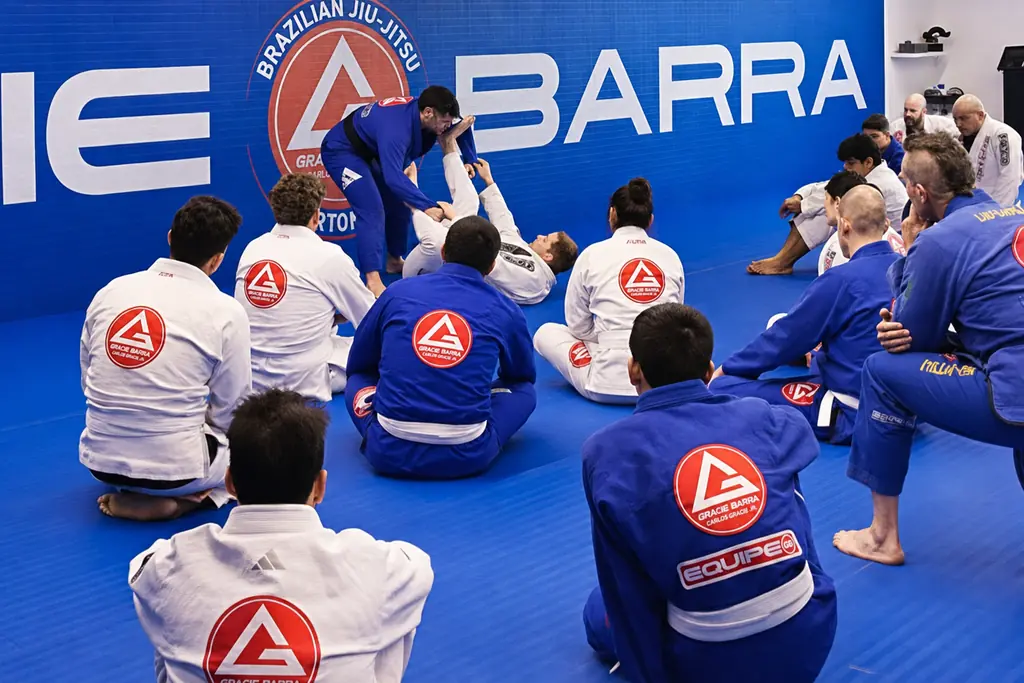
Adults class in session at Gracie Barra Riverton
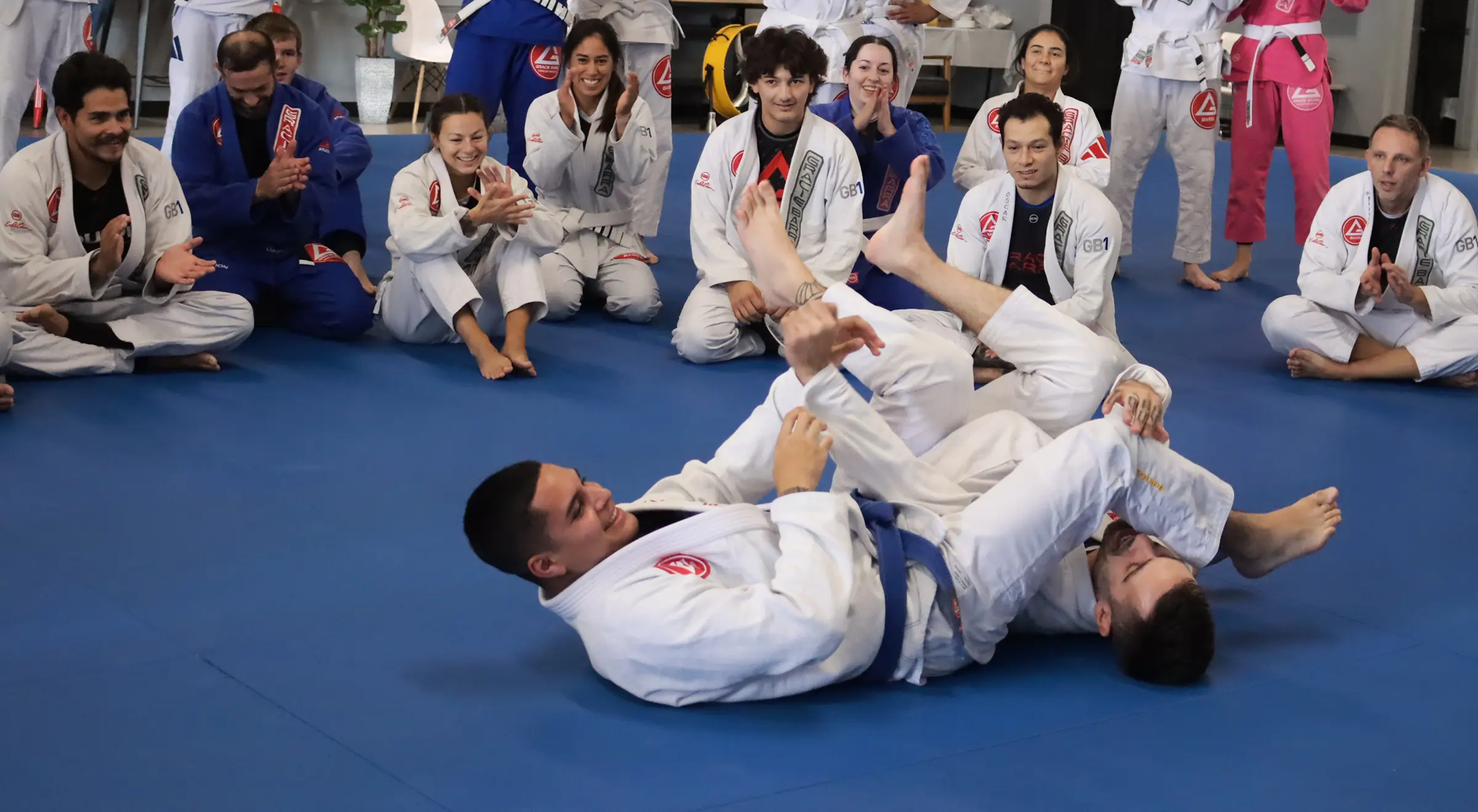
Students training together at Gracie Barra Riverton

Book a free trial and come try it

One hour will tell you more than this page.

Come try a free class. We will lend you a uniform so you get the full experience, and you may well leave surprised at how good you feel afterwards.

Common questions

About adult classes.

Can I start Jiu-Jitsu as an adult with no experience?

Yes, and that's the normal way to start here. Adults with no background begin in GB1 Fundamentals, where every technique is broken down from zero. You will never be dropped into a higher-level class.

Am I too old to start Brazilian Jiu-Jitsu?

No. Our adults include people who started in their 30s, 40s, and 50s, and our head professor started at 28 himself. The whole system is built on leverage and technique so a smaller or older person can handle a bigger one. Read Professor Seidler's story.

Do I need to get in shape before I start?

No. You build the fitness through training, not before it. You control your own pace, and you can stop and rest at any point in any class.

What's the difference between Fundamentals and Intermediate?

Fundamentals, or GB1, teaches the core positions, escapes, and movements one at a time, with no assumed experience. Intermediate, or GB2, adds combinations and more live training against real resistance. You move up when your instructor says you're ready, not on a fixed timeline.

How often should an adult train?

Two or three times a week is a strong start. Once a week still builds real progress as long as you keep showing up. Classes run six days a week with morning, midday, and evening options.

Can I train at other Gracie Barra schools?

Yes. Every membership includes one visit per week at any other Gracie Barra school, and the Shield and Legacy plans add unlimited training at Gracie Barra Salt Lake City, West Jordan, Herriman, and Riverton.

How much do adult classes cost in Riverton?

Your first class is free, with a uniform we lend you. After that we run month to month, with no contract, and one membership covers every adult program. Talk to our team after class and we will go through the options to find the best fit for you. See our membership plans.

Where are your adult classes held?

At our academy at 2936 W 12600 S, Ste 1&2, Riverton, UT 84065, with free parking right in front. Students drive in from South Jordan, Draper, Bluffdale, and Sandy. The contact page has a map and directions.

Send us a message

Leave your contact and we'll reach out.

Fill out the form and someone from the academy will get back to you shortly.

Beginners are the norm here. Most people who contact us have never trained before.

Full transparency. Ask about pricing, class times, or how a session actually runs. You get the real details up front.

Your first class is free whenever you decide you're ready.

Loading the booking form…