Skip to content

Kids classes • Riverton, Utah

Kids Jiu-Jitsu classes in Riverton

Ages 3 to 9, grouped by age so your child trains with kids at a similar developmental stage.

Your child learns to fall without fear, to stay calm when things get physical, and to finish something they started. Along the way they get stronger, sleep better, make friends outside school, and pick up a skill that will keep them safe for the rest of their life. Their first class is free, and we lend them a uniform.

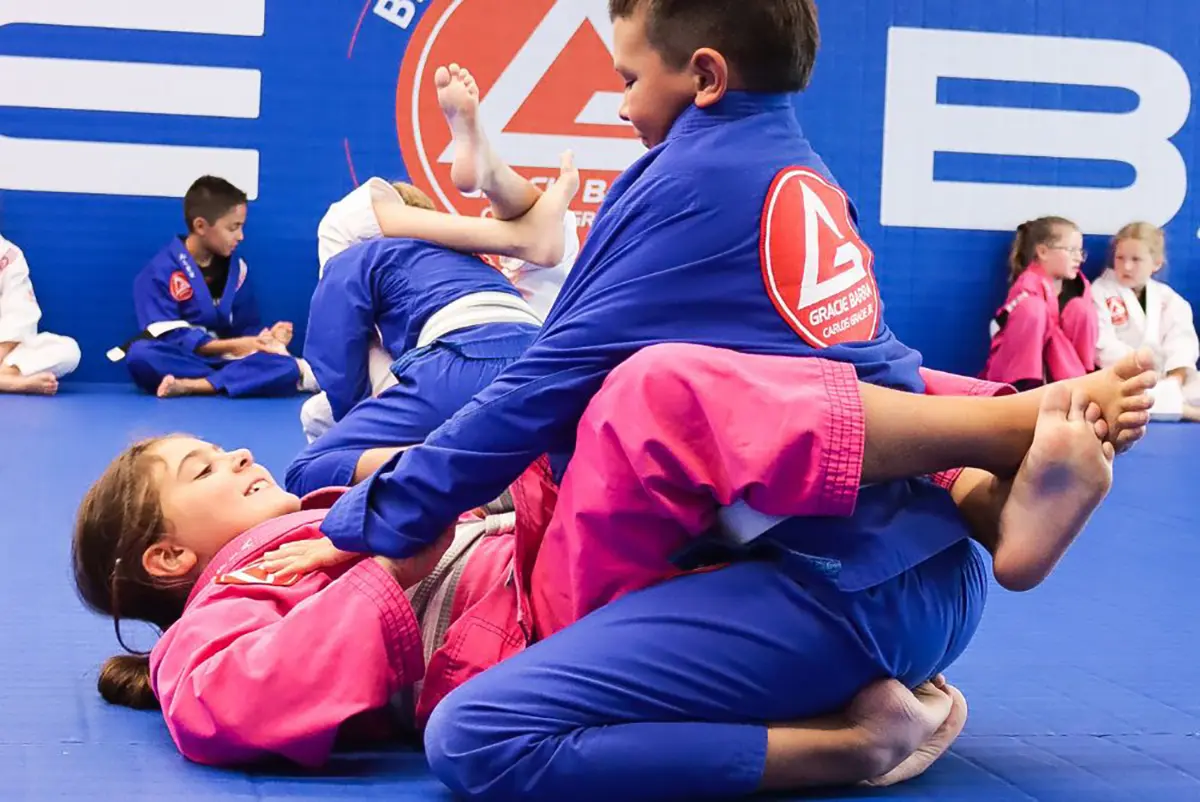
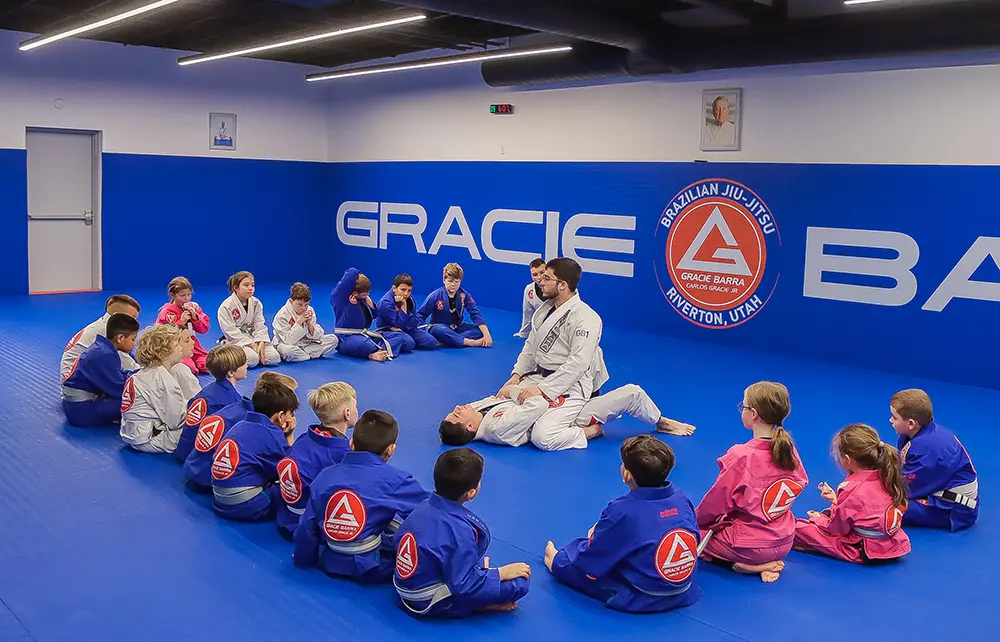
Kids Brazilian Jiu-Jitsu class at Gracie Barra Riverton in Riverton, Utah

The right class for the right child

Three programs for younger kids.

A four-year-old and a nine-year-old need completely different classes. Gracie Barra splits them properly, and your instructor takes age, size and stage into account when placing your child.

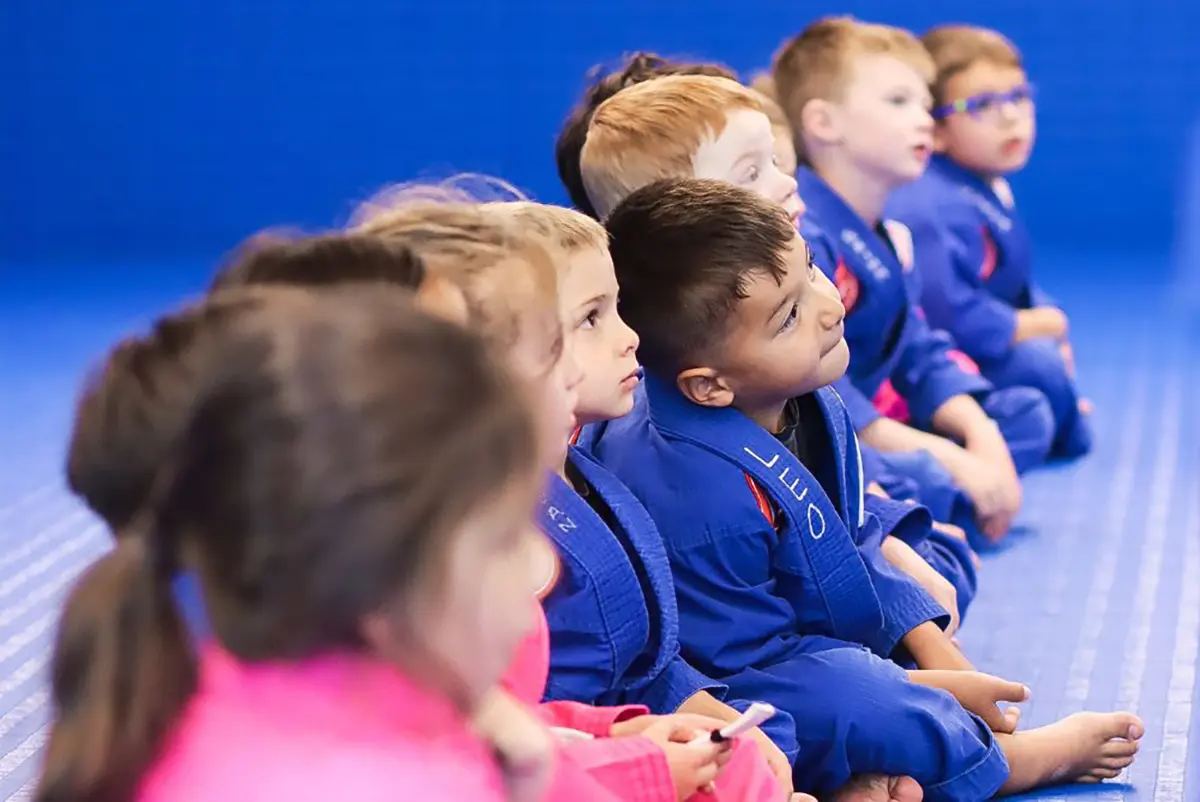
Young children training in the Tiny Champions program at Gracie Barra Riverton

3–4

Years old

Tiny Champions

To your child it feels like an hour of games, and that is exactly the point. Crawling, rolling and balancing are real Jiu-Jitsu movements adapted for how little kids learn, so they pick up coordination, listening and their first techniques without ever sitting through anything that feels like a lesson.

What parents notice firstFollowing instructions, and a lot more body awareness than they had a month ago.
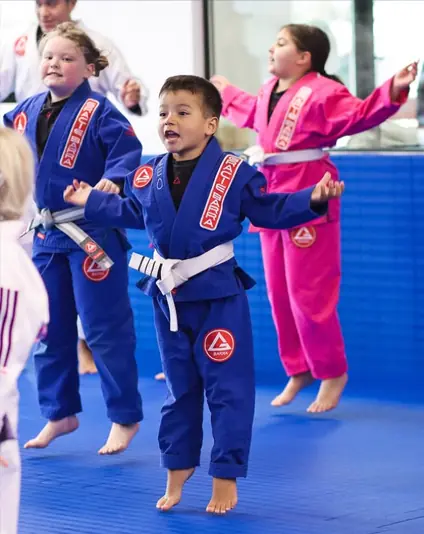
Children training in the Little Champions 1 program at Gracie Barra Riverton

5–6

Years old

Little Champions 1

The most fun class in the academy, and the one where real Jiu-Jitsu starts. Basic positions, moving on the ground, and working with a partner, all still taught through games. Children develop quickly at this age, and they barely notice how much they are learning.

What parents notice firstFocus that stretches longer, and following a 2 or 3-step instruction unprompted.

Children training in the Little Champions 2 program at Gracie Barra Riverton

7–9

Years old

Little Champions 2

The positions get more advanced and the technique starts to look like the real thing: escapes, controls, and working with a partner who resists a little. This is where Jiu-Jitsu starts giving a child something no other sport does, which is the quiet certainty that they can look after themselves.

What parents notice firstConfidence, and staying calm instead of panicking when something gets physical.

Age 10 and up

The next step: Juniors & Teens.

From age 10, students move into the Juniors & Teens program, where classes become more technical while still keeping safety, confidence, and age-appropriate instruction at the center. Learn more about our Juniors & Teens classes.

See it for yourself

What a kids class looks like.

Reading about it only goes so far. Press play.

Videos load only when you press play, so this page stays fast on a phone.

Why parents keep bringing them back

What Jiu-Jitsu does for a child.

Most of these show up at home and at school before they show up on the mat.

Focus that carries into school

A Jiu-Jitsu class asks a child to watch a demonstration, hold several steps in their head, and then do them in order. That's the same skill a classroom needs. Teachers often notice it before parents do.

Confidence that isn't loud

Kids who know they can handle themselves stop needing to prove it. The confidence Jiu-Jitsu builds is quiet: it shows up as a child who walks into a new room without hiding behind a parent.

Coordination and real athleticism

Rolling, crawling, balancing, and controlling their own weight builds the movement base every other sport sits on top of. It's especially good for kids who haven't found their sport yet.

Learning to lose well

In Jiu-Jitsu a child gets caught, resets, and tries again, many times in one hour. That repetition teaches them that being stuck is temporary and fixable, which is a hard lesson to teach any other way.

Respect, practiced not lectured

Bowing onto the mat, shaking hands before and after, helping a partner who is struggling. Discipline and respect become habits because they're built into every class, not because someone gave a speech.

Friends outside the classroom

Training partners are a second social circle, separate from school. For a child having a hard time socially, that alone can change the shape of their week.

Bullying

Why Jiu-Jitsu is the right answer to bullying.

This is the reason a lot of parents call us, so let's be direct about how we handle it.

1

It's built on control, not on hitting

Jiu-Jitsu is grappling focused. A child learns to control a situation and hold someone safely until an adult arrives. That means they can protect themselves without hurting anyone and without becoming the one who gets in trouble.

2

Most of it never gets physical

Children who train carry themselves differently. They stand differently, they're harder to intimidate, and they don't panic. A lot of the problem solves itself before anything happens, simply because your child stops looking like an easy target.

3

We teach the order of responses

Walk away first. Use your words. Tell a teacher or a parent. Physical control is the last option, not the first, and our instructors say that out loud in class, repeatedly.

4

Calm is the actual skill

What makes bullying work is the reaction. A child who has been in uncomfortable positions on the mat hundreds of times doesn't flood with panic the first time someone crowds them. That composure is trained, and it's the part that transfers.

What we don't teach: starting fights or using Jiu-Jitsu to intimidate someone. We teach children to protect themselves, step away when they can, and ask an adult for help, using physical skills only as a last option.

The honest answers

What parents ask us before they book.

Six questions we hear on the phone almost every week.

"Is my child too young to start?"

If they are three and potty trained, they are old enough. Tiny Champions is built around what a three-year-old can actually do: movement, listening, taking turns. There is no expectation that they master anything, and no pressure if they have an off day.

"Will my child get hurt?"

Kids classes are controlled, supervised, and grouped by age, and every class is supervised by an instructor who is watching for it. Every instructor is CPR trained and background checked, and a tap stops everything instantly.

"My kid is shy and won't want to go in."

Most of them are, on day one. Our instructors expect it and know how to handle it, and no child is dragged onto the mat. Plenty of kids watch their first class from the edge and join in the second one. That's normal here.

"Will this make my child aggressive?"

The opposite, in our experience. Kids who know they can defend themselves have nothing to prove, and the whole class culture is built on respect and helping your partner. Discipline is the part we're strictest about.

"They've never done a sport before."

Then this is a good place to start. There's no team to make, no bench to sit on, and no skill you need before you walk in. Every child progresses at their own pace against their own last month, not against the kid next to them.

Inside the academy

The room your child would train in.

Kids on the mats, on an ordinary week.

Kids Brazilian Jiu-Jitsu class at Gracie Barra Riverton
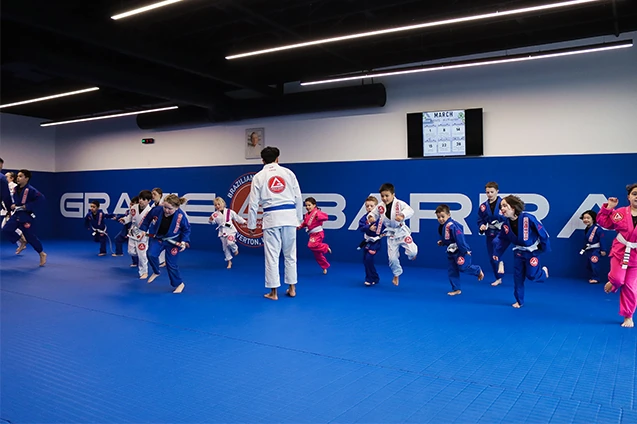
Children training technique at Gracie Barra Riverton
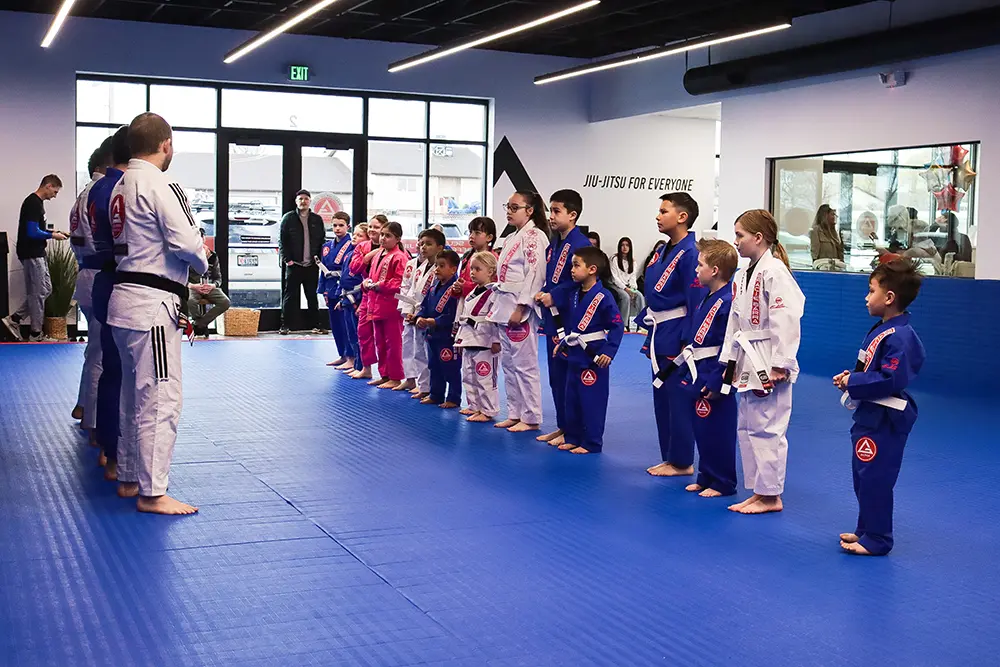
Kids lined up at the start of class at Gracie Barra Riverton
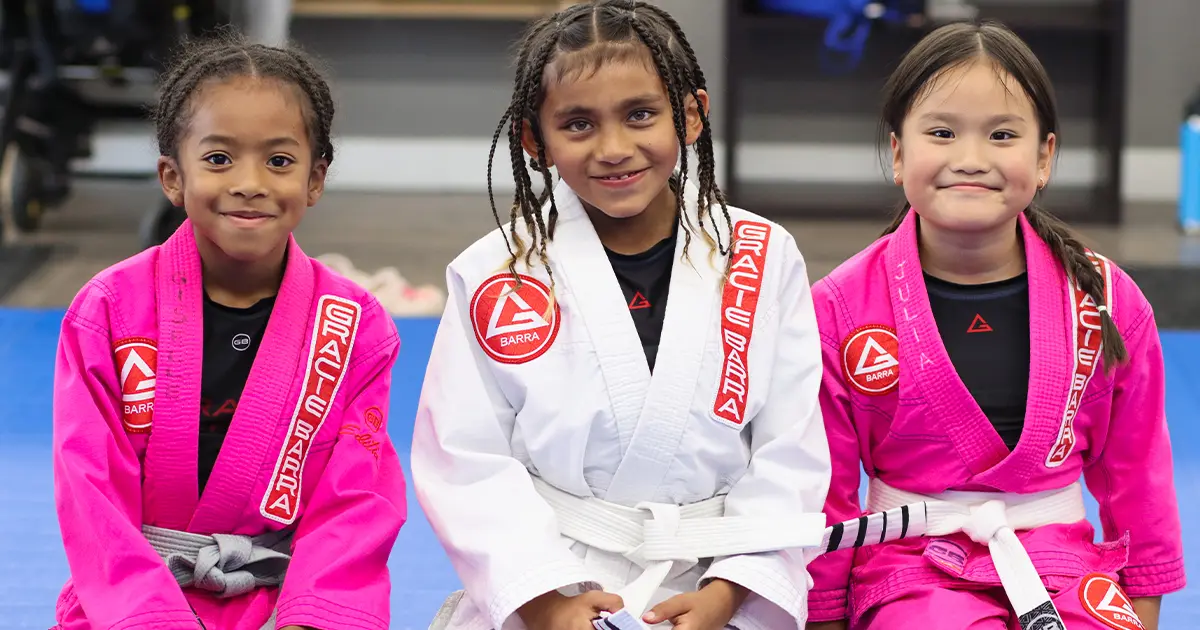
Young students on the mats at Gracie Barra Riverton

Book a free trial and come try it

Bring them in and watch one class.

Sit on the side, see how the instructors talk to the kids, and let your child decide. The first class is free, we lend the uniform, and nothing is due that day. If it isn't for them, no hard feelings.

Common questions

About kids classes.

What age can kids start Jiu-Jitsu?

Age three, in our Tiny Champions program. From there children move into Little Champions 1 at five and Little Champions 2 at seven, then into our older youth groups from age ten.

How are kids classes grouped?

By age first, then by size and skill level. Your instructor places each child where they will learn best, and the more experienced children are encouraged to help the newer ones, which is one of the fastest ways for a young student to develop.

Is Jiu-Jitsu safe for children?

Yes. There is no striking in our kids program, classes are supervised and age-grouped, and every instructor is ICP certified, CPR trained, and background checked. A tap from either child stops the exchange immediately.

Does Jiu-Jitsu help with bullying?

It's one of the few martial arts genuinely suited to it, because it's based on control rather than hitting. A child can stop a situation and hold someone safely without hurting them. We also teach the order: walk away, use words, tell an adult, and only then use what they know.

Does my child need a uniform to start?

We'll lend them a full Gi so they get the complete experience.

How often should a child train?

Twice a week is a great rhythm for most kids. Once a week still builds real progress, and more is fine for children who love it.

Are your instructors background checked?

Yes, every one of them, with no exceptions. They're also ICP certified through Gracie Barra's instructor program and CPR trained. Meet the team.

How much do kids Jiu-Jitsu classes cost in Riverton?

The first class is free and the uniform is on us. After that we run month to month, with no contract. Check our membership plans for what each one includes.

Where are your kids classes held?

At 2936 W 12600 S, Ste 1&2, Riverton, UT 84065, with free parking right in front of the school. Families drive in from South Jordan, Draper, Bluffdale, and Sandy. Get directions.

Send us a message

Leave your contact and we'll reach out.

Fill out the form and someone from the academy will get back to you shortly.

Beginners are the norm here. Most people who contact us have never trained before.

Full transparency. Ask about pricing, class times, or how a session actually runs. You get the real details up front.

Your first class is free whenever you decide you're ready.

Loading the booking form…