
Juniors & Teens • Riverton, Utah
Juniors & Teens Jiu-Jitsu in Riverton
Ages 10 to 15. Their own program, with partners matched by age, size and skill.
An hour off the screen, training partners from outside school, and confidence that carries into difficult situations. The first class is free and we lend the uniform.
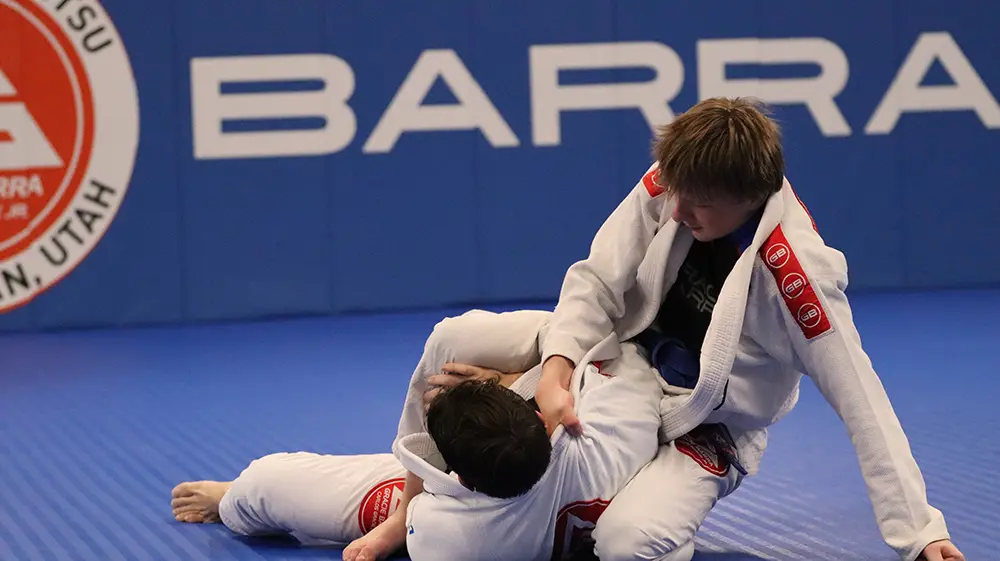
The program
Juniors & Teens.
One program for the whole 10 to 15 range, with groups and partners organized by age, size and skill.
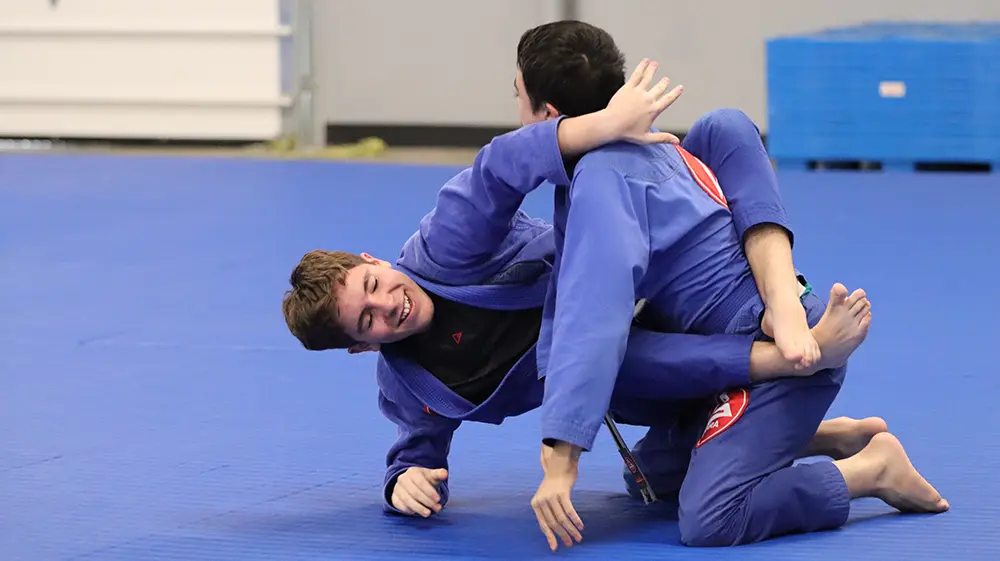
10–15
Years old
Juniors & Teens
This is the bridge between the kids room and the adult mats. The games mostly stop, the focus moves to technique, and teenagers are treated like the young adults they're becoming.
It is also the age where self-defense stops being abstract. A teen who trains learns to keep themselves safe and de-escalate without throwing a punch. That confidence can change how a teenager carries themselves in difficult social situations.
- Real technique, taught properly. Positions, escapes, and controlled partner work, at the same standard as the adult curriculum but paced for their age.
- Grouped by age, size and skill. Partners are chosen deliberately in every class, so every teen trains with someone who suits where they are.
- Progress they can see. Stripes and belts, earned over months, on a path that continues straight into the adult program at sixteen.
- No bench, no cuts, no tryouts. Nobody sits out because they aren't good enough yet. Everyone trains every class.
Check the class times or call (801) 436-7373 with your teen's age and we'll point you to the right class.
Why it works at this age
What teens can gain from Jiu-Jitsu.
Ten to fifteen is a hard stretch. Here's what an hour on the mat actually changes.
Confidence that matters
These are the years when kids become most self-conscious about their bodies and where they stand socially. A teenager who knows exactly what they can do physically carries themselves differently, and it isn't something they have to perform. It's just true, and they know it.
A social circle outside school
Training partners come from different schools and different grades, and none of them know your teen's reputation from the seventh grade. For a kid who is struggling socially, or who just needs somewhere that isn't school, a second circle of friends can change the shape of their whole week.
Progress without the bench
Most teenagers quit sport somewhere in this window, usually because they got cut, benched, or simply stopped enjoying it. Jiu-Jitsu has no team to make and no starting lineup. Everyone trains every class, and progress is measured against last month rather than against the person next to them.
Focus that reaches school
Watching a demonstration, holding four or five steps in your head, and executing them in order is the same skill a classroom asks for. Teens who train tend to get better at sitting with something difficult instead of bouncing off it, and that habit doesn't stay on the mat.
Losing, in small safe doses
A teenager gets caught, resets, and tries again several times in one hour. Doing that over and over teaches something hard to teach any other way: that being stuck is temporary, that it's survivable, and that the answer is usually to adjust rather than to quit.
Practical self-defense skills
Jiu-Jitsu is built on control, so a junior or teen learns to manage a situation and hold someone safely while prioritizing de-escalation. Most of the value is that it never gets that far.
Off the screen
One hour with the phone in a bag.
This comes up in almost every conversation we have with parents of teenagers.
The phone physically cannot come with them
You can't hold a phone and train. For that hour it sits in a bag and your teen is fully present with other people. No willpower, no argument at home. The activity doesn't allow it.
It's in person, and that's the point
Training partners are real people your teenager has to communicate with and look after. That's a different kind of practice than a group chat, and it gets harder to find at this age.
Tired in the right way
An hour of physical effort gives them another reason to put the screen down, move, and finish the day genuinely tired.
Something to be good at that isn't a game
A lot of screen time is really the pull of visible progress: levels and ranks. Jiu-Jitsu offers the same thing in the physical world, with stripes and belts that take months.
Worth being realistic: two hours a week won't undo a screen habit on its own, and we wouldn't claim it does. What it gives you is a few hours where your teenager is active, offline, and around people who are glad they showed up.
The honest answers
What parents ask us about Juniors & Teens.
Six things we hear on the phone almost every week.
"My teen doesn't want to try anything new."
Almost none of them do at first, and it's usually the fear of being bad at something in front of strangers. The first class is free. Plenty of teens arrive with their arms crossed and leave asking when the next class is.
"They've quit every other sport."
Jiu-Jitsu is a lot like learning a language. Nobody is fluent in a month, and the progress is gradual, which is exactly why it sticks. The teens who stay with it are usually the ones whose parents encouraged them through the first few months.
"They're not athletic at all."
Jiu-Jitsu is built on leverage and timing rather than speed or strength, which is why it suits teens who have not found their sport yet. Conditioning is built through the training itself, so it is a result of practicing rather than a requirement to start.
"Will they get hurt?"
Training is controlled and supervised, and partners are matched by age and size. A tap from either person stops everything instantly, every time. Every instructor is ICP certified, CPR trained, and background checked.
"Will it make them aggressive?"
Our experience is the opposite. Teens who know they can handle themselves have nothing left to prove, and the class culture runs on respect and looking after your partner. We teach them to protect themselves and never to start anything.
"What if they don't know anyone there?"
Nobody knew anyone on their first day. Jiu-Jitsu is trained in pairs, so within twenty minutes your teen has worked with two or three people. It's one of the fastest ways we know to stop being the new kid.
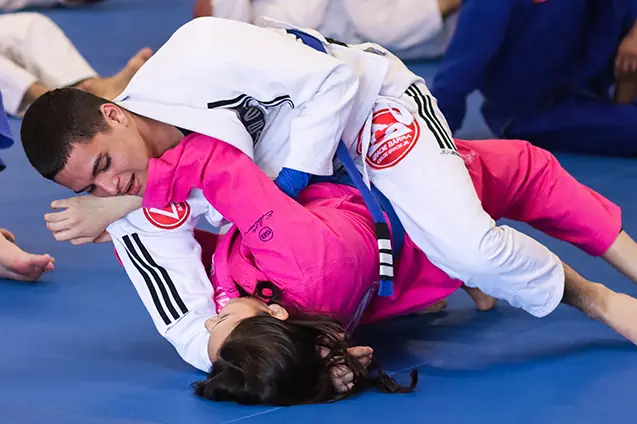
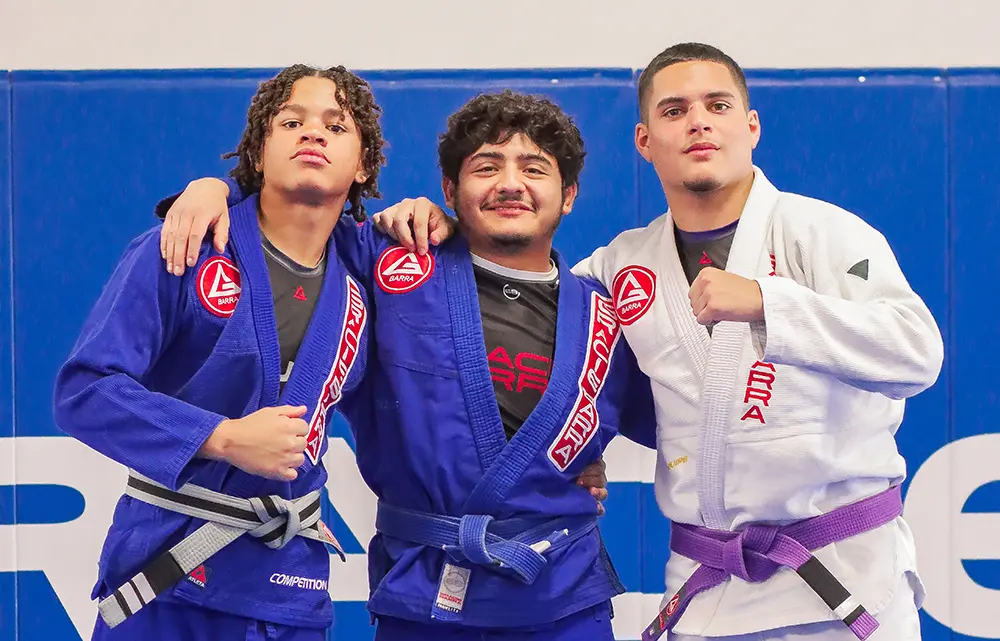
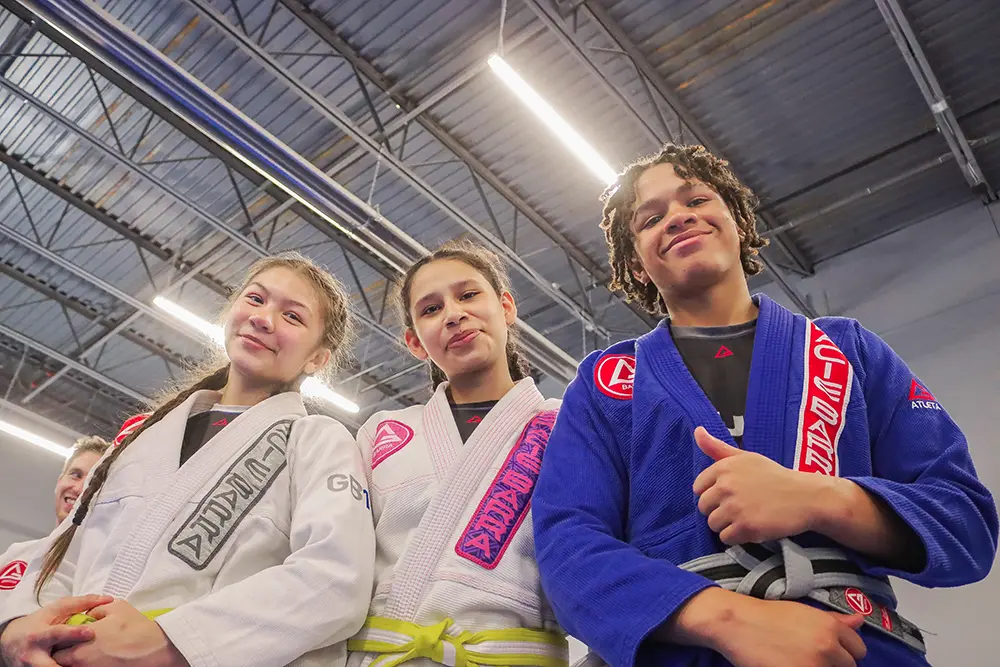
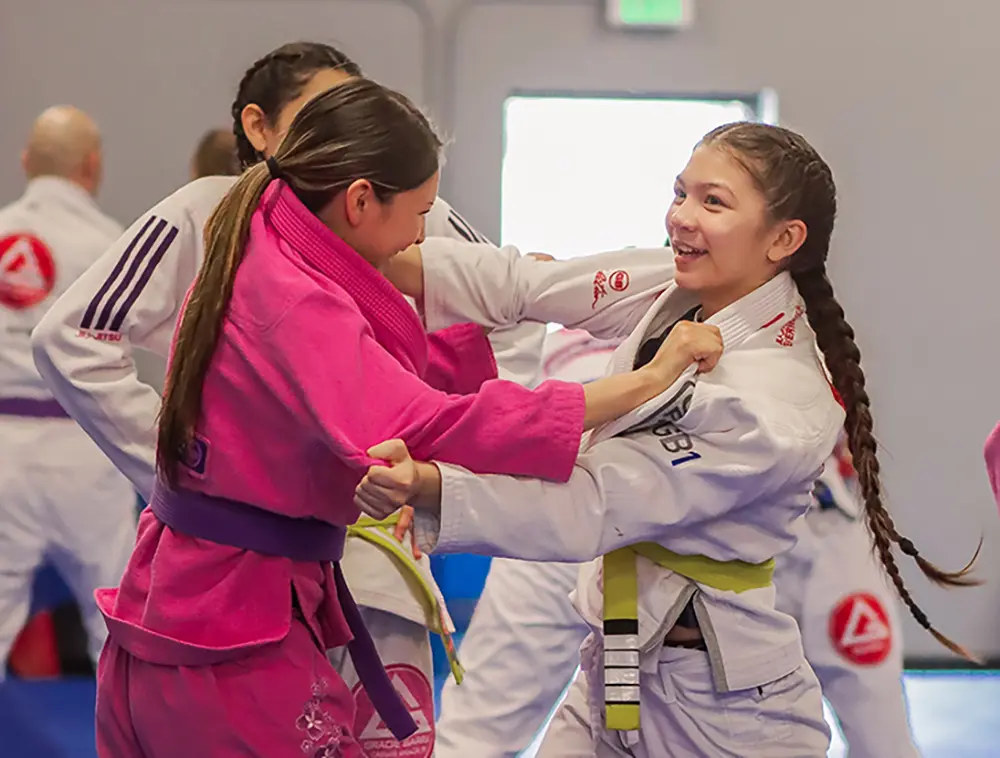
Inside the academy
The room your teen would train in.
Juniors and teens on the mats, on an ordinary week.
Book a free trial and come try it
Let them try one class and decide.
Bring them in, sit on the side, and watch how the instructors talk to the teenagers. The first class is free, we lend the uniform, and nothing is due that day. If it isn't for them, no hard feelings and no follow-up calls.
Common questions
About teens classes.
What age is the Juniors & Teens Jiu-Jitsu program?
Ages 10 to 15, in our Juniors & Teens program. Younger children train in our kids classes from age three, and at sixteen students move into the adult program.
Is Brazilian Jiu-Jitsu good for teenagers?
It suits this age unusually well. There's no team to make and no bench, progress is measured individually, and it gives a teenager a social circle separate from school along with an hour of hard physical activity away from a screen.
Do teens train with adults?
Teens have their own classes with other teens, and partners are matched by age, size and skill within the group. A teen who shows the development and the ability for it can also be invited by their instructor to train in the adult classes. At sixteen they can move into the adult program.
Is Jiu-Jitsu safe for a growing teenager?
Yes. All classes are supervised, and partners are matched deliberately by the instructors so every teen has a great experience. Instructors are ICP certified, CPR trained, and background checked, and a tap ends any exchange immediately.
What if my teen has never done a martial art?
That's the normal starting point. Every technique is broken down from zero and no prior experience is assumed. There is nothing to catch up on.
Does Jiu-Jitsu help with bullying at school?
It's one of the few martial arts genuinely suited to it, because it's based on control rather than hitting. Jiu-Jitsu gives teens the tools to control and protect themselves while prioritizing de-escalation. We also teach the order of responses: walk away, use words, tell an adult, and only then use what they know.
How often should a teenager train?
Two or three times a week is a strong rhythm. Once a week still builds real progress as long as they keep coming. Classes run six days a week, so most school and activity schedules find a gap.
How much do Juniors & Teens Jiu-Jitsu classes cost in Riverton?
The first class is free and the uniform is on us. See the membership options for what each plan includes.
Where are your Juniors & Teens classes held?
At 2936 W 12600 S, Ste 1&2, Riverton, UT 84065, with free parking right in front of the school. Families drive in from South Jordan, Draper, Bluffdale, and Sandy.
Send us a message
Leave your contact and we'll reach out.
Fill out the form and someone from the academy will get back to you shortly.
Beginners are the norm here. Most people who contact us have never trained before.
Full transparency. Ask about pricing, class times, or how a session actually runs. You get the real details up front.
Your first class is free whenever you decide you're ready.
Loading the booking form…