
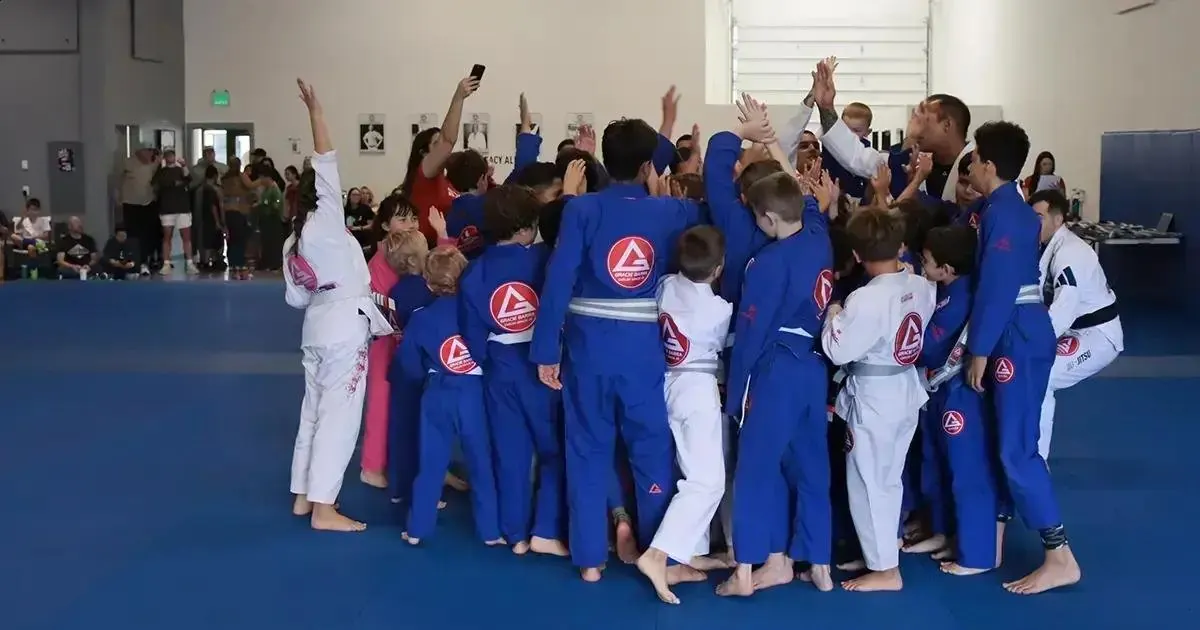
Jiu-Jitsu involves physical contact, so the right question is not whether the risk of injury is zero. Parents should ask how a class is supervised, how techniques are adapted to age and how children learn to stop an activity. An introductory visit lets you see those practices in context.
Five safety checks
- Are children grouped by age and appropriate ability?
- Are techniques explained before partner practice?
- Do children recognize verbal and physical stop cues?
- Does the instructor monitor pace and partner behavior?
- Do parents know how to communicate injuries or other restrictions?
What safe participation should look like
Age-appropriate tasks
At Gracie Barra Riverton, the published Kids program separates ages 3–4 (Tiny Champions), 5–6 (Little Champions 1) and 7–9 (Little Champions 2). Teens ages 10–15 have a separate program. Ask which movements and partner activities are intended for your child's group, rather than assuming the children train like adults.
Clear communication
Children should understand that they can tell the instructor when they are uncomfortable and stop when asked. Respect for a tap or stop signal is essential in a contact activity. Ask how the instructor introduces these concepts to younger students and what the procedure is if a child becomes distressed.
Appropriate supervision
Watch whether coaches can see partner exercises, intervene when a drill becomes too rough and provide alternate instructions when needed. Published biographies help you learn who is on the team, but you should confirm who is currently teaching your child's class.
What risks should parents consider?
Contact sports can involve collisions, falls, twists or overexertion. No program can guarantee that a child will never be injured. Report relevant restrictions to the staff before participation and ask a qualified healthcare professional about concerns following injury or for conditions that affect exercise. Avoid using a blog article in place of individualized medical advice.
Does BJJ prevent bullying?
A class may help children practice communication, self-control and supervised problem-solving. It does not guarantee protection from bullying or replace school and family safety processes. See our guide to bullying and calm responses for realistic expectations.
What is offered in Riverton?
Classes take place at 2936 W 12600 S, Ste 1&2, Riverton, UT 84065. The Kids program serves ages 3–9, with Juniors & Teens for ages 10–15. The first trial class is published as free, with a loaner gi offered for the introductory experience.
Because a family's routine is part of the decision, review the schedule. If your child wishes to continue, consult the published pricing and membership conditions before paying.
Questions to ask the coach on the day
- What partner contact is permitted in this group?
- How do children signal that they want to stop?
- How do you handle a student who is nervous or overwhelmed?
- How can I report an injury or other training restriction?
- When should I consider a different age group as my child grows?